
Review of Accidents
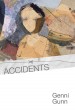
“The first accident is birth followed by the first absence as this poet begins to mend the familiar faces in broken windows and broken crockery, to complete unfinished portraits and fill in the hairline cracks in memory, as, quoting Mark Strand, her “parents rise out of their thrones into the milky rooms of thrones.”
Genni Gunn's story begins in ancestral conflict, where smashed plates in domestic arguments reverberate “plates inside the earth, this liquid rage a perfect storm,” as she finds refuge in many rooms, the countries of the heart, and the notion, shared with Strand, of invisible interventions.
As she changes key from absence to artifact, we note the human condition, substituting phenomenal evidence of existence for the parental void, inhabiting characters and masks, even voices, discovering
The scold’s bridle was a mask attached
to a locked iron muzzle studded with spikes
to dissuade women from speaking,
yet words are masks too.
Many witness to poetry as praise song, secular prayer. All agree that it should be its own music, and writers like Gunn, whose authentic voice hovers in the jazz key of B flat, is a refreshment of that golden rule.
And every night
she is transformed into a darkness
other than herself –
And, as she rolls into her third movement, we realise this opus is more than scat, unstrung songs related to the heart but a construct, maybe opera. She is Italian after all. In the theatre they say every movement must have a motivation. For this poet it is navigation of the ghosts who accompany her on her journey through time. Invisible, blind, moving by touch, haptic decisions, they are always present, invisible, irrevocable. Once touched, they become memory, as hard and fast as any rule of music or grammar. Love endures. Danger endures. Accidents happen.
You cannot ignore them
or turn them away
they cleave to you-
They know you the way
refugees know one another…
In the end, the event, Gunn, in her final costume, birthday suit again, gives us a prescription for anxiety, the condition of our time as we hover in the shadow of global catastrophe
In the event of an event impending death build windows
to escape from eternal arks temples for disbelievers to conceal
the aftershocks bridges to span the sudden gulps the panic
and the enduring hope that we will overcome, reverberations of the childhood rhyme, going in and out the windows, as we have done before.”
Read the full review at The British Columbia Review
More Reviews of this title
No reviews found.




 Back to top