
Review of Faceless
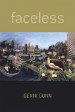
“When I first open Faceless, I am grateful for the familiar, a poet engaging with the world, a specifically Canadian world, celebrating place and our relationships with it. The first section, wEstSCAPES, explores both the physical and the personal along continental edges, fault lines, forest fires, streetscapes: "...Pilgrimage to the source/The mountain speaks stone/erupts its language/from within/a furious will/without alternatives/I recognize my features in the scarred face."
The second section, Faceless, explores the meaning of faces and face, from fashion and the cosmetics industry, the Body Worlds exhibit, to tabloid news of Faceless Woman Mauled by Dog, and face transplants with the suggestion that memories of past lives are transplanted in the cells of organs. "The woman removes her mask/and dons a suicide face/who will she see in the mirror?/whose dead and/beating heart?"
The third section, Barroom Scenes, revisits past lives, the strippers and piano-bar pianist, where the guitar player "can still coax/the heartbreak from my bones" and the narrator remembers "wine and Gitanes on a stranger's tongue" and how "I poker-smile his/hands into his pocket loosen the knot of bills." The fourth section, Florence, traces the crazy-old-lady relative Florence's morphing (as described meticulously by others, with the gift of empathy or understandings) from eccentricity into mental illness. The poem concludes with a word association, Florence and Florence, abandoning the character and turning to the ancient city of art and light: "I close my eyes and think of the other Florence/David, Dante, Giotto's crucifix/the past spacious with statues of saints and martyrs/eternally virtuous eternally selfless/the city's cerulean eyes fixed on a distant horizon."
The fifth section, Single, returns to the nacient dance where "they" are watched and judged. One poem is "ripped from the headlines" about an anorexic kept alie on life support for fiteen years, with a conclusion that is a translation of the name from the Italian. Usually this sort of language surprise (direct translation) as a shortcut to insight does not impress me but this poem is an exception. ("Shiavo"="slave" but I don't want to spoilt he surprise.) Although still subjective and opinionated, it goes beyond the reported struggle of "who controls the plug" and into the backstory of how, perhaps why, she tried to die in the first place: "At the hospital/they amputate her right hand/Does this mean she will never have a second-in-command?/Can one have a right-hand man without a ..."
It is with the section Florence that the collection begins to fall apart for me. Diction, poetry itself, is being exploited for the purposes of argument and projecting personal opinions. I feel I am being told what to think rather than being helped to experience, to feel. The characters in these little vignettes--the suicide, the eccentric, the abandoned, the woman in a vegetative state--seem for the most part to be seen from the outside, leaving an impression of gossip and a feeling of unease. "Vancouver Street" equates the homeless man with his home. "Like Ruins" collects in a cluster every thought you ever had about cancer; the poem's shifting viewpoints, from concerned loved ones, to patient, somehow weaken the impact. As a reader, I begin to feel that I'm just another mark crowding the piano players as she loosens the bills in my pocket. I'm looking at another pretty face, someone with fast fingers, technique, but an ulterior motive. By the end of the evening, I cannot recall her features--"no golden arms or silver handshakes/no exhiliarating epiphanies."”
More Reviews of this title
“In the poems in Faceless, Genni Gunn explores the many masks worn and peeled away in attempts at formulating identity, influencing opinion and finding a place in vast, nullifying or unforgiving landscapes. Sometimes it is nature masking itself as benign, when in reality it has the "furious will" of a wrecking ball, smashing things in its path on the predictably unpredictable cycle of birth, growth and death… When a vital part of physical identity is taken away—as in the title poem where a French woman's face has been ripped off by her own dog, or in "Hands" where two Mexican women each lose a hand in successive industrial accidents—there is only emptiness left behind, and an even greater yearning for acceptance by the world.”




 Back to top