
Review of Falling Into Flight: A Memoir of Life and Dance
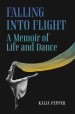
“In the early 1930s two dancers from British Columbia were invited to join the corps de ballet of Basil’s famous Ballets Russes. The offer came with one condition: Patricia Meyers from Vancouver would have to become Alexandra Denisov and Nanaimo’s fifteen-year-old Jean Hunt would also take the Russian sobriquet Kira Bounina. Times have certainly changed since the 1930s. Canadian dancers no longer have to go abroad to make their careers — in Vancouver alone there are more than five professional dance companies — and if dancers do leave the country they can perform under their own names. Nor are Canada’s dancers and choreographers dependent on appraisal from abroad because critics like Vancouver’s Kaija Pepper are fulfilling the challenge of seeing “a choreographic work as objectively as humanly possible in order to develop accurate and fair-minded description.” (p. 48). Even so, as Kaija Pepper makes clear in Falling into Flight, A Memoir of Life and Dance, this art form “It isn’t taken seriously, even by other artists” (p. 29).
If the reader expects this award-winning author and dance critic to tell us why this is so they will be disappointed.
The connective thread running through Falling into Flight charts Pepper’s year-long therapy sessions with Dr. B. The therapist helps her to overcome her severe claustrophobia — elevators, public washrooms and crowded restaurants were no-go areas. He also enables Pepper come to grips with her unpredictable Russian-born mother Zina. “‘I’m at the end of my tether!!’ my pretty dark-haired mother would scream, coughing in spasms of fury as her throat seized up” (p. 35). “Your mother didn’t make room for you to be seen and heard, she didn’t know how,” was Dr. B’s observation (p. 40). Andy Kaija, Pepper’s father, was raised in the Finnish community of Thunder Bay, Ontario, before settling in Vancouver’s East Side where he drove a truck for Lafarge Cement Company. Andy was easier on his four children: he was silent and mild-mannered and had a taste for the Romantic poets.
Though ballet is largely off stage in this memoir, Pepper, who began ballet lessons at the age of six, vividly recalls her first performance; pasting images of ballerinas in her Micky Mouse Club scrapbook; watching Nureyev and Margo Fonteyn perform on the Ed Sullivan show; and attending her first ballet — it was Coppélia.
And while Pepper had what can only be described as a tortured relationship with her mother, it was Zina Kaija who laboured over her Singer sewing machine to make her daughter’s ballet costumes; Zina who accompanied her daughter to her ballet lessons; and Zina who took her daughter to her first ballet, Coppélia.
Pepper stopped taking ballet lessons when she turned fifteen. Three years later she studied the dance technique of Martha Graham and a few years after that, while enrolled in communication arts at Concordia University, she turned to jazz ballet.
It was in Montreal where “Writing turned out to be a good fit.” Where, Pepper’s “relationship with the art form [of Ballet] could develop without the intense public scrutiny of performing life in front of an audience, or even in front of other dancers in a studio” (p. 115). And also where she “came to value critical writing for the way it extended the short-lived theatrical existence of most productions of putting dance onto the page, corralling the ephemeral moments of performance into words and sentences that supposedly live forever” (p. 115). When Pepper returned to Vancouver, following a stint in the U.K., she became a leading critic and the author of three books on dance.
When I finished Falling into Flight I wanted to read more about Pepper’s observations on dance, about which she writes so splendidly. I wanted more quotations from her journals, which would have enlivened her text. And I wanted more dates that would have told me when the events she discusses happened.
Even so, Kaija Pepper’s memoir brought back my own memories of attending ballet lessons, of wearing my first tutu and of negotiating my teenage years around a difficult mother who also made my ballet costumes. But it is Pepper’s passionate and knowledgeable writing on the critic’s role in relation to what she calls “the underdog in the art world” that convinced me that dance is worth taking seriously (p. 29).”
Read the full review at The Ormsby Review
More Reviews of this title
“Kaija Pepper has authored several notable studies on Canadian dance. Currently the editor of Dance International magazine and a critic for the Globe and Mail, she has contributed to numerous national and international anthologies, journals, and theatre programs. Her expertise, both theoretical and practical, is well earned, for she studied classical and jazz ballet, tap, and modern dance. Like all good critics, she interprets as she describes, inviting readers to join her on a figurative and spiritual journey. Now with a memoir to her name, Falling into Flight, Pepper presents her own life as something of a dual dance: a sequence of movements within and outside herself.
Falling into Flight is an engrossing narrative about Pepper’s coming to terms with the troubling world of her childhood in Vancouver and with the artistic passion that has shaped her personally and professionally. It begins as a dreamlike retrospective, where she is still known as Susan Anne, a five-year-old standing beside her thirty-seven-year-old Finnish father, Andy, after “a ride in his Lafarge Cement truck.” Things quickly flash forward several decades to when Andy, who “had never missed a day of work,” is dying of prostate cancer. Pepper’s mother, Zina, will die of esophageal cancer within the year.
When Pepper describes her father’s funeral, it’s as if she is writing a movie script, using such techniques as montage, close‑ups, angular shots, zooms, crosscuts, and especially flashbacks: “Now that Dad is gone, no longer in the present and with no possible future, I am left only with the past.” The two had a close, loving connection that contrasts with Pepper’s fraught relationship with her Russian mother, whose screaming litanies of life’s inadequacies and betrayals contributed to “the river of sadness that flowed through the centre of the house on Clarendon Street where my family moved when I was five.”
Truth be told, Pepper often deploys mixed metaphors rather than sustained or clarified images. This is somewhat ironic, as it’s clarity that she pursues through years of psychotherapy with Dr. B, following the loss of her parents. “I’ve recently become an orphan,” she tells him during their first session. Week after week, as Dr. B waits “patiently above the surface,” Pepper plunges into the river’s “cold unwelcoming depths to retrieve my childhood — the difficult parts, half-hidden in the riverbed.” Usually, it doesn’t take her long to “reach the primary source of the river: my mother’s tears, which flowed easily in response to life’s provocations.”
While the river of sadness once “trickled inside” Pepper, it “ran inside” her mother, who was often unable to cope with her four children. Virulently intolerant and sometimes cruel toward others — including young children — she loomed as an emotional mess and created a stressful world for Pepper. Zina steered her daughter into classical ballet, but she would later show little engagement with her professional writing. Ultimately, though, Zina emerges in the book as more of a victim than a villain, one with her own painful backstory.
Just as Pepper’s therapist attempts to interpret her memories, Pepper attempts to interpret the dance that is her life. “Being able to write about yourself is a sign of presence,” Dr. B tells her, but she never discusses with him “the complications of subtext,” such as being told “more than you want to know about yourself.” Nor does she elaborate on a paradox she points out: how the critical interpreter can be in close partnership with dance, as if in “a dream of metamorphosis, in which a simple fall can transform to become freedom and flight.”
Pepper describes the transformative connections she had with dance as a child: her dentist, whose daughter Lynn Seymour was one of her era’s great dramatic ballerinas; her introduction, through The Ed Sullivan Show, to Rudolf Nureyev and Margot Fonteyn; her study of ballet with her older sister. And she describes how her high school years were defined by “a hierarchy of acceptable body shape and skin colour,” as if she and her peers “were performing our lives for the aesthetic enjoyment of other people.”
Shy and sexually inexperienced, Pepper protects her “secret female space,” resisting the advances of a drunken married man while babysitting and frustrating the attempts of another, a guy with a sports car who picks her up when she is hitchhiking. Her sexual initiation finally comes in Calgary, with a weed-smoking young man who makes her “skinny, green-skinned” body’s “contentment feel like love.”
One of the fascinating qualities of this slim but revealing memoir is its portraiture of family figures, such as Finnish and Russian grandparents, and of the author herself. Pepper is almost candid to a fault, not because of some appetite for vulgar confessionalism, it seems, but because she is intent on finding her own psychic centre. Early in their relationship, Pepper’s therapist informs her that she is no narcissist: she sees everything from other people’s points of view, so much so that she experiences a void within. “I somehow had to find my voice and send it out to fill the room with ‘me.’”
After high school, Pepper left Vancouver to study communication arts at Concordia University. She describes a number of creative encounters during her five years in Montreal, the most striking being with Marc Gervais, a brilliant Jesuit film scholar who was “equally at ease with both high and low art.” She recalls how Gervais would pronounce thrillingly on Truffaut, Hitchcock, Bergman, and Godard: “It’s thanks to Marc I knew about the French Nouvelle Vague, or New Wave, and that I used the term auteur not just correctly, but lovingly, as a badge of honour for the men whose oeuvre (another new term) we devoured.” She also recalls a day of cross-country skiing, which ended when Gervais dropped her off at her Notre-Dame-de-Grâce apartment:
"As we said our good-byes, Marc leaned over and kissed my cheek, an unexpected move that I accepted graciously, feeling a surge of power — not in a showy muscular way, but quietly, as if my irresistible female body was calling the shots at a molecular level. Being present for this brief intimate connection was an easy thank-you for the wonderful day."
For decades, Pepper considered the memory “a fond one,” though societal revelations have since “crept into the way the kiss resonates.” The moment now complicates “a chapter intended in part as an homage to Marc Gervais, the King of Film Ideas.” Even with “nagging hindsight,” however, she acknowledges how this man gave her “practical and imaginative tools with which to approach criticism, along with a conviction that ideas mattered as much as emotion.”
Was Pepper’s acceptance of Gervais’s kiss all those years ago a case of her “compulsive empathy”? Does she now question too much? A few pages later, she regains her confidence and describes with remarkable candour her relationship with John, a young man she used to call her Fred Astaire: “Every time we went to a club, our dancing took me into heady fantasies involving the trinity of my body, his body and the music. John would swing me round in cosmic configurations, the music our safety net.” Pepper wanted to “dance a song about John and me against the world,” but he withdrew so slowly that it took her a while to realize his “long absence” was permanent. “I was devastated at how easily John had given up our dance — and dumped me, though I couldn’t bear to think of it in such direct ‑personal terms.”
Later, she married a much older British actor and production designer, and they had a daughter. They moved to England, only to have their marriage fail because of his hard drinking and hysterical outbursts. As she learned how to cope with depression and being a single mom, she grew increasingly strong and independent. This progression — this sense of putting “Susie and her troubles” in the past — culminated with a cathartic renaming. “I was christened Susan Anne. Kaija was my surname, though it is also a girl’s name in Finland.” At first, going by Kaija was simply a way to distinguish herself from other Susans in her jazz class, but it took on great power after the divorce:
"The universe itself seemed to be sending a sign when I read about the concept of ka — the vital and eternal force within us — while researching ancient Egyptian literature for a media culture course. The “ka” in Kaija turned the name into a talisman I wanted to keep close."
Throughout her career, Pepper would discover the pleasure of Sibelius, whose music her father occasionally played, and have many powerful experiences as both critic and audience member. But it is family to which she returns at the end. Her mother’s “not sweet but somehow enticing” voice stays with her, as does “the raging one.” It’s through an image of Russian nesting dolls that she now pictures their relationship: “My mother inside me and her mother inside her, in a series of mothers and daughters going endlessly back and back and back. Going forward as well, with me inside my daughter.”
Falling into Flight concludes as it begins, with Andy, this time in palliative care. Pepper drives her mother for her first visit to the ward and is struck by her parents’ reunion: “As if a magnet was drawing her to him, my tiny old mother moved straight to my father’s side, where they kissed greedily, noisily, smack on the lips.” The scene, Pepper writes, is neither maudlin nor tragic. Rather, it is a deathbed duet — about life, desire, forgiveness, and love — to be added to a life’s repertoire of dance.”
Read the full review at Literary Review of Canada.
“KAIJA PEPPER MERGES ART WITH LIFE IN HER 2020 MEMOIR, Falling Into Flight
Describing the thorniness of recording dance (and one's life) in writing, Kaija Pepper cites Arlene Croce's concept of the afterimage – "the remembered dance" that remains in the mind's eye after the curtain closes. In reading Falling Into Flight: A Memoir of Life and Dance, I can confidently say that books, despite their lasting tangibility, create afterimages too. Surprisingly for a fellow dance aficionado like myself, it was not Pepper’s life-giving encounters with dance that lingered after setting the book down but the more intimate interactions unfolding on the smaller domestic stage.
Pepper (née Susan Ann Kaija), a dance critic, historian and editor, grew up at 5211 Clarendon St. in Vancouver alongside three siblings and her Finnish father and Russian mother, Andy and Zina, both first-generation immigrants. Her relationship with each parent differed greatly. She fondly recounts the thrill of riding in her father’s Lafarge cement truck and his go-to dish of scrambled eggs and chopped wieners. Volatility characterized her mother’s presence. Zina's tears and anger came quickly and without warning, creating what Pepper frequently refers to as a "river" of emotion running through their one-storey house with green siding.
The memoir that grows from these facts is a grippingly honest attempt to grapple with the traces parents leave within their children. Along the journey through her memories – often depicted in the form of dialogue with Dr. B, her therapist – Pepper brings her critic's eye to bear on past events.
Her illustrations of her parents' final moments (less than a year apart) were difficult to get through, not for lack of literary finesse; her vivid descriptions caused me to linger inside my own memories of watching for my grandfather's final breath, "the intake coming after a long period when nothing happened and it seemed his lungs would never fill again. Then – one more breath – followed by that no-man's land of breath and no-breath." Capturing the dance inside that liminal space between life and death for both the departing and the observers at once.
Pepper's words so fully inhabit her childhood memories that I found myself wanting to skip ahead to the part of her story when dance becomes the central object, an anticipated relief from the complicated but often clearly painful exchanges between parent and child. Vignettes set inside the Graham-based modern dance classes of Linda Rabin, or the athletic choreographic experiments of Paula Ross, sparkle with all the energy and inspiration that was so abundant during Canada's dance boom in the 1970s.
Descriptions of watching dance, "making that imaginative leap across the footlights into a heightened artistic reality," felt all too sparse, but I will concede that this is appropriate. Fully immersing herself in dance became an escape from the challenges of early family life and its echoes into adulthood, and it becomes a precious escape for the reader as well.
The culmination of Pepper’s story is one in which her self-actualization entwines with her maturing dance criticism practice. After a handful of years in England, Pepper returned to Vancouver as a single mother, determined not to repeat the same patterns of emotional unavailability she witnessed in her childhood. In this period, she began her inaugural column for Dance International magazine, entrenching her status as a dance expert in Vancouver, across the country and beyond.
Flashing forward to 2011, Pepper describes herself sitting in the Queen Elizabeth Theatre watching a Ballet BC mixed program featuring the Finnish choreographer Jorma Elo and set to Sibelius, her father’s preferred composer (whom he often appreciated alongside a glass of whiskey). Here we witness Susan Ann Kaija colliding with Kaija Pepper, life and art merging into a unified whole.”
“In Falling into Flight, Kaija Pepper, a Vancouver writer, dancer and dance critic/historian, turns her finely tuned critic’s attention to her own life and memories.
The opening passage evokes a dream about the author’s father and his painful death from cancer.
Writing about dreams can be a dangerous business. Unless the shimmering ambiguities and surreal tone of the dream world are handled with exquisite care and precision, the dream can turn to mush and smoke on the page. Pepper manages the fraught dream material well, and by the second page this reader was hooked.
This is a book about death and loss, among its many other themes. Pepper’s mother, too, dies of cancer, and the author uses her observations and reflections at her mother’s death bed to give a vivid portrait of their complicated, difficult relationship. Both her parents came from immigrant stock. The father’s family was Finnish and the mother’s Russian, and one of this graceful memoir’s many virtues lies in the clear-eyed, partial but loving account Pepper gives of both these family pasts.
The dance metaphors here are irresistible. Like any good dancer, Pepper first establishes her rooted connection to the earth and gravity in these origin stories, and then launches herself and her narrative into flight.
Lovers of dance who have enjoyed Pepper’s earlier books and her reviews in the Globe and Mail and Dance International Magazine will be drawn to this memoir both for the author’s descriptions of dance and dancers and for her sensitive storytelling. This storytelling includes passages of heart-piercing beauty like the image of mothers and daughters nested inside each other’s memories like Russian dolls.
Pepper gives us scenes from psychotherapy, too, including the moment, early in her therapy, when she announces to her doctor that “writing about dance is my calling … Dance is the underdog in the art world. It isn’t taken seriously, even by other artists.”
But Pepper is undaunted by the lack of status her chosen field provides, or by the personal heartbreaks she experiences along the way. She clearly loves dance and savours her memories of her own time as a dancer and her long career as a dance critic. Her book invites us to join her in a dance with memory , desire, trauma, beauty and loss. Readers who join her in this dance will be rewarded. Let’s dance.
Highly recommended.”
Read the full review at Vancouver Sun.
“Kaija Pepper’s Falling into Flight is a slim volume; one could mistake it for a collection of poetry. It might be fair to assume a memoir will bear similarities to a novel and that these may not stop at length or structure or cover art. The narrative will often employ many of the same techniques as long fiction: strong character development and emphasis on setting, a driving plotline with a cliffhanger at the end of every chapter, flashbacks promising us understanding of a key turning point in the past and flash-forwards promising us understanding of how the writer has been made whole over time. Falling is not that kind of book.
It is clear that we are embarking on a different type of literary experience as soon as we reach the “Contents,” which look more like the program for an evening of classical music than a conventional chapter breakdown. This prepares the reader to enter Pepper’s world: one of dance and music, silences and currents, yearning and reality. The twenty‐three chapters are divided into five sections (or movements?), and one notes a recursive quality in their titles: “My Renegade Body,” “My Mother’s Renegade Body,” “The Small Dance Inside of Me,” “Returning to the Dance Inside.” In this way, too, we are primed to enter a narrative that is like classical music, in which some themes bend back on themselves for further exploration in new keys and tempos.
Pepper’s is not an unusual story: at mid‐life, she finds herself in the office of a psychiatrist after exhausting her options with doctors who cannot resolve all the physical symptoms that have begun to assail her in the wake of her parents’ deaths. Initially unnerved by the openendedness of Dr. B’s questions, she soon warms to him and gradually learns how to view and articulate the events of her life so that she becomes the protagonist of her own story. When Dr. B tells her she is the opposite of a narcissist, she is initially flattered and then “discover[s] that the opposite was to have no center, only a void from which I somehow had to find my voice and send it out to fill the room with ‘me.’”
In addition to sparking forgotten memories, offering new language for old wounds, and freeing both the girl (née Susan) and the woman (rechristened Kaija) into the present, psychotherapy shakes the foundation of Pepper’s identity as a critic and dance writer and precipitates her first forays into writing personal narrative. Toward the end of her five years with Dr. B (and the end of the first “movement”), when she tells him she has formed a writing group with friends and is tackling memoir, he replies encouragingly: “Being able to write about yourself is a sign of presence.”
Though there are editorial lapses throughout the book—a recurring metaphor is used too often, a crescendo arrives at a muted climax—reading this memoir is an intimate, even humbling experience. Without realizing it, we have in fact accepted an invitation to witness an artist writing herself into being. As we progress through the chapters, the selves she was become sharper in outline, like photographs in a darkroom: we meet the child in a tutu, the teenager hitchhiking cross-country in search of the autonomy she has always craved, and the adult who learns, through marriage to a much older man, that time works differently when we have passed life’s zenith. The self‐possession of the woman and writer Pepper has become fills in those outlines.
Falling into Flight will be especially resonant for women born into the second wave of feminism, or for readers curious to understand how recently it was that middle‐class North‐American girls were raised to see themselves through boys’ eyes and through the mercilessly reductive lens of popular culture and the media (plus ça change…). Pepper’s gradual emergence, therefore, is not only a matter of finding a way to cleave her quiet self out of the shadow of her much more dramatic mother, but to own and embody the self who, for decades, navigated cautiously through the deeply male-dominated worlds of higher education, employment, and art‐making.
Kaija Pepper is widely known in Canadian dance circles. She has written three books on Canadian dance, contributed to numerous national and international publications, and serves as dance critic at The Globe and Mail, editor of Dance International, and sessional instructor at Simon Fraser University. She is an authority in her field and no stranger to the written word, yet Falling into Flight—born out of grief, mysterious physical ailments, psychotherapy, and deep, complicated love for both her late parents and her own life as an artist—vibrates with the vulnerability of a dancer who has taken her place in the spotlight for the first time.”
“Often, memoirs skip along the surface of the author’s life even when they provide juicy insights into past events. This is especially so with books written by retired politicians, business leaders, or film stars.
It’s far rarer to come across a memoir that delves deeply into the author’s feelings, both in the past and in the present, while maintaining compassionate insights about others who may have caused them pain. And that, along with terrific storytelling, is what makes Dance International editor Kaija Pepper’s new book, Falling into Flight, so utterly compelling.
The Vancouver dance historian bares all about her five years in therapy. Pepper reveals her bumpy relationships with men. She shares how she felt, as a Concordia University student, when noted film professor and Jesuit priest Marc Gervais kissed her unexpectedly after a day of cross-country skiing. There are tales of hitchhiking and nearly being raped. And her vivid descriptions of her parents, including their deaths, will make any reader revisit their own upbringing.
There’s something eerily voyeuristic about reading this book. It’s so damn intimate.
There’s similar candour about why Pepper was so attracted to writing about dance. She bluntly states that dance doesn’t receive nearly as much respect from other artists as other areas of creative endeavour. Again, more honesty.
Then there are stark revelations from her family history, which are at the core of the memoir. Her father immigrated from Finland as a child; her mother immigrated from Siberia via China.
This isn’t Mommie Dearest—Pepper has too much empathy for others to simply trash her mother, who immigrated from Siberia via China. But there are moments in Falling into Flight when her mom’s lack of consideration helps explain how Pepper’s life unfolded. Through therapy, she learns that family dynamics of a mother and daughter competing for a father’s attention contributed to her lifelong eagerness to seek approval.
“I would never be free of my parents’ influence,” she writes. “Our relationship remained a source of psychic energy I couldn’t seem to mature beyond, the need to please was too deeply embedded: not just in my interactions with other people, but also in the creative drive I began for the first time to question. My work as a writer was apparently no more than a way to gain approval, a stupidly onerous way.”
In the acknowledgements, Pepper praises Vancouver writer Evelyn Lau for providing a second professional edit, noting that “her poet’s expertise in looking deeply into language, structure and the human spirit were humbling”. For readers who relish Lau’s courage in dissecting her life in books, magazine pieces, and poems, they’ll find a fellow traveller in Pepper.
Falling into Flight certainly enhances one’s literacy about dance. But even more importantly, it opens one’s mind to the freedom that comes from true self-awareness. Pepper demonstrates how this can be achieved through deep introspection while maintaining a tremendous capacity to identify with others. Bravo!”
Read the full review at The Georgia Straight.






 Back to top