
Review of Give Us This Day
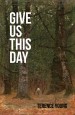
“Lovers of the short story should rush right out and get their hands on Victoria writer Terence Young’s new collection. I was utterly captivated by these stories that gently probe ordinary life with grace and insight. Some of the fourteen stories included have been published before, but it’s a treat to have them all in one volume.
Young (Smithereens) is adept at various points of view, and shows his skill in first and third narrators. He even uses the second person, a technique I generally dislike; but after reading “Handsome Is as Handsome Does,” I see how it can work in the hands of an expert. The main character, a real estate agent, is trying to mend his marriage. He hits a car in a parking lot and leaves. His avoidance of responsibility spirals, and his actions are stupid. And he thinks his wife will help. The second person point of view places all readers in his shoes or behind the wheel, and most readers (I hope) will immediately realize the character’s problematic reaction to the fairly minor accident, and the “you” separates readers from the character quite effectively.
Several stories probe into faltering marriages or relationships, and they are all utterly believable. Characters make choices that change lives. In “Be Kind, Be Calm, Be Safe,” the pandemic has frightened Dylan’s landlords who have boarded up the door from his basement suite to their part of the basement. Once they had been friends, but now Dylan is stuck in his small apartment trying to keep up with his online university classes. His loneliness is heartbreaking: “Government handouts might fill his cupboards with food, help with his rent, but they can’t stop him from going insane.” And then he learns that his mother is very ill “on the other side of the country.” Going to see her would at least mean spending time with his sister. Dylan’s need for social contact is palpable, and Young is adroit at showing the ordinary necessity of some kind of community.
Aging is also an ordinary part of life, and in “Black Tusk,” Young exposes the friendship between two men. The story examines what constitutes a friendship. As the narrator’s wife says to her husband, “No offence … but an older man wanting to stay young makes sense, but what does he have to gain by hanging out with you?” The younger man, Finn, doesn’t appear to want anything but a companion for adventures, biking, paddling, and hiking. Eventually they drift apart, and then ten years later Finn and his new wife are invited for dinner. And the narrator is happy to have reconnected even though their lives are different.
Contemporary issues include financial loss. In “Daily Bread,” which is worth the price of the book on its own, Peter falls victim to a con man. His retirement in Italy ends, and he’s back in Canada selling insurance. As the narrator notes, “More shameful is his current standing as one of dozens of ‘seniors’ bilked of their savings by a former professional hockey player turned Ponzi con man.” His life is significantly reduced from what it had been before his Italian adventure, and he is just trying to survive his financial disaster.
His empty life is disrupted briefly when he meets two homeless men on a bench and they offer him a drink. He knows that while he has lost his Italian dream, he is still better off than many: “His panniers are full of food, his home has a big bed, his closets hold clothes for every season, and, yet, these two insist on offering him some of what little they have. There are lessons to be learned almost everywhere, he decides.” He thinks about all the immigrants he saw in Italy cobbling together a bit of income.
This story, like so many in this collection, has a remarkable ending. Young places his characters in a world, the real world, where they simply have to keep going, no matter what has happened to them. And he leaves the stories mostly open-ended, which emulates life. It goes on. Until it doesn’t.
“The Sins of the World,” which follows “Daily Bread,” takes a look at a man who caused financial harm. Harry lost his broker’s licence because he gave bad advice: “Now his house was gone, his savings, investment properties, wife. He was living on GICs he’d hidden from creditors, and when they were done, he’d have to get inventive.” He does get inventive, but in a positive way, and Young is careful to humanize this flawed man who is capable of changing his outlook and desires.
Give Us This Day is a collection of touching stories written in a style that is both everyday and elegant. The big things in life can go terribly awry, but Young’s characters have the capacity to find pleasure in the small things—and to recognize that often those small things are what matter.”
Read the full review at The British Columbia Review
More Reviews of this title
“A profound meditation on regret, resilience and the fragile beauty of human connection forms the heart of Give Us This Day (Signature Editions $21.95), a new collection of short fiction by Terence Young. The stories explore the weight of the past through a kaleidoscope of voices and styles, capturing the quiet reckonings of everyday existence. His subjects range from retired grandparents thrust into unexpected childcare and young labourers adrift in mines and road crews to teachers struggling to find meaning and couples at a crossroads. Young is a prolific author who recently retired from teaching English and creative writing at St. Michael's University School and is a co-founder of The Claremont Review, an international literary journal for young writers. In 2008, he was awarded the Prime Minister’s Award for Teaching Excellence.”
Read the full review at BC BookLook.





 Back to top