
Review of Home Game
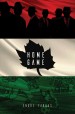
“I like [Home Game], for many reasons. Montreal. Montreal in the 60s. The Café Prague, where I once played the piano. The Mountain, and the description of the Chalet floor. Park Avenue, and the wrinkles it has acquired with age. Tommy’s love of Montreal. Marianne, who seems like the song come to life. Tommy’s diminished command of his native language. In Hungary, Tommy is home, and he isn’t. Tommy is a minority everywhere he goes, except the team. He is outnumbered by his parents, by Naomi and Marianne and, in Hungary, by the sheer vastness of place and people, for which his child’s vocabulary is inadequate. Gabi exploding the masquerade. Frog’s heartbreakingly true explanation of what it means to write poems. His Goldstein-like tract at the end, where he takes his stand. “Our sunbaked faces are the maps of where we are born.” is a beautiful sentence. I have never before seen explained, or even verbalized to myself, something I have long sensed: that in Eastern Europe, the weight of life gives meaning to life.”
More Reviews of this title
“Hungarian-born, Montreal-based writer Endre Farkas is an award-winning poet. In 2016, he published the semi-autobiographical novel Never, Again, about a family of Holocaust survivors in Hungary. Home Game is the follow-up, with the protagonist Tommy Wolfstein now a teenager in Montreal amid the throes of 1960s social upheaval. Tommy, a star soccer player, gets the opportunity to travel to his homeland for a game, forcing him to confront the spectre of his family’s past.
The first part of the book is largely a chronicle of Tommy coming out of his shell, from a European Jewish refugee family into the thoroughly modern world of 1967 Montreal. The multicultural mix of his soccer team (complete with a few questionable cultural stereotypes) acts as a gateway; when he meets his Spanish teammate’s flower-child sister, Marianne, she introduces him to the seismic changes happening in society. To anyone who lived through the Summer of Love and Expo 67, the warm look back at the era will no doubt strike a chord...
Farkas breaks up the narrative with flash forwards to Tommy’s travails in Hungary, and when he arrives there, the novel really comes alive, in both its story and its imagery. The small-town Hungary of 1967 mixes the charms of an old world that has yet to embrace modernity (his aunt lives in a house with no running water, and her next-door neighbours are working blacksmiths) with the widespread chronic paranoia of a Soviet state. Farkas’s portrait of the country is full of detail, lively and engaging, and here Tommy is confronted with the very real reasons for his parents’ fears.
The idealistic Tommy, coming of age in the era of Expo, believes in a society changing for the better, but his battle-worn, old-world parents caution him that some things never change. Today, with the forces of xenophobia and ethnic nationalism one again on the ascendancy – in Hungary and closer to home – Farkas’s book offers a sobering reminder that his parents have a point: these dark forces have always been with us and may always be... [Home Game] succeeds in weaving together an evocative, bittersweet tale.
”
Read the full review at Montreal Review of Books.






 Back to top