
Review of Micro Miracle: A True Story
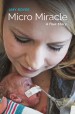
“Micro preemie, big miracle
In her new book, a Kanata mom chronicles her daughter’s first year of life
At only 23 weeks pregnant, Kanata mom Amy Boyes was hospitalized and on bed rest, in danger of going into labour. As the seriousness of the situation sank in, Amy and her husband Josh had the first of many difficult conversations. When born that early, many babies are affected by long-term disabilities, and others don’t survive. Amy and Josh knew that if their baby was born before 24 weeks, they would tell doctors not to resuscitate her.
A few days passed, and Amy’s condition stabilized. They transferred to a hospital with a Level IV NICU, or neonatal intensive care unit, the highest level of care available. At 24 weeks pregnant, Amy went into labour and Madeline was born. At 16 weeks early and weighing just over a pound, she was among a very fragile class of babies known as extremely premature.
“She started crying right away,” says Amy. This was a good sign, because a baby’s lungs are one of the last organs to develop. Despite Madeline’s healthy cry, she needed to go directly to the NICU. “They picked her up and whisked her away,” Amy remembers. It would be a month before she would hold her daughter for the first time.
Madeline is six years old now, a joyful grade one student with high energy and a love of bike riding. “Maybe it was that energy that carried her through,” says Amy. The first month was very difficult. She had a heart murmur. She developed an infection that turned out to be E. coli. She had just recovered when she acquired pneumonia, and her lungs started to collapse. She lost weight, dropping down to just 520 grams. Through all of this, Amy and Josh learned all they could from the medical professionals caring for their daughter. The couple came to the hospital twice daily to participate in patient rounds with the nurses and neonatologists.
“There was a lot of support,” she says. They were offered counselling and literature to prepare them for making decisions about Madeline’s care. “These are not easy decisions,” says Amy. When Madeline was at her most ill, Josh and Amy had to decide whether their baby should get a high-dose steroid injection to prevent her lungs from collapsing. Although it was potentially lifesaving, it could increase the risk of neurological damage.
“We had nothing else to do,” she remembers. Madeline grew stronger after the injection, but Amy remembers how difficult it was to make decisions from both an ethical standpoint and the position of being a parent. “You want to give this child a good life,” she says, “but you’re deciding these things for another human being.”
During Madeline’s first year, Amy began writing about Madeline’s time in the NICU. The writing grew into a memoir, Micro Miracle: A True Story, published by Signature Editions.“Madeline’s journey exemplifies the human struggle, and I wanted to share that story,” says Amy. She also hopes people support other families in similar situations. “Parents go through a lot. They’re working with the doctors the best they can. Try not to offer too much advice,” she says, and then adds, “and bring food.””
More Reviews of this title
“When Every Decision Could Be Life Changing… “Micro Miracle: A True Story”
The birth of your first child is supposed to be one of the most joyous occasions of your life, and for former Morden resident Amy Boyes it was. But the day her daughter Madeline was born was also one of the most trying, heart wrenching and challenging of her life.
Amy, who now calls Ottawa home with her husband Josh, gave birth 16 weeks prematurely. Madeline’s eyes were fused shut, and she weighed just over a pound. Her experience of giving birth so early, and the terribly difficult decisions the couple had to make afterward, form the basis for the book she’s written... a memoir titled “Micro Miracle: A True Story”.
Amy returned home to Morden last week for a book signing, and spoke with reporter Brooklyn Toews.
Amy Boyes: Micro Miracle is the story of our daughter’s extremely premature birth. Madeline was born 16 weeks premature, so that’s at 24 weeks. She weighed just over a pound, her eyes were fused together, [and] her skin was so fragile that you could see the outline of her stomach. The story of Madeline’s triumph, of her health, is the story of the book. Through the course of her hospitalization there were many moments where we were not even sure if she was going to survive but she did survive and she survived beautifully.
Brooklyn Toews: What was going through your mind when you realized this was not going to be your normal birth or pregnancy?
AB: I was hospitalized at 23 weeks and at that point we realized that it was unlikely that if she were to be born that she would survive. Those are really difficult decisions to make at that time about would we resuscitate this baby if she were born 17 weeks premature. Thankfully she came 16 weeks premature and the odds of her survival had increased so it was very easy. She was born crying and of course we resuscitated her, but listening to the counselling you realize that yes this situation has gone south really badly.
BT: And I’m sure that’s a scary situation too, like how do I even make a decision when there’s all this crazy stuff happening around me, and it’s another human’s life, right?
AB: Absolutely, and part of the ethics of making decisions for someone else. When we decided to resuscitate we knew that potentially she would have life-threatening disabilities but yet we were still opting for life for her. Later on, when she was extremely ill, we were given some ideas about what we could do for medication. One medication was going to help her lungs clear of pneumonia but it greatly increased her risk of cerebral palsy. We were left with the option of if you do nothing she will likely die, maybe by the end of the week, or if you do the medication she may very well have cerebral palsy—what do you want to do? Of course we did the medication but that’s not an easy decision to make.
Can you imagine having to make that decision? Just one of many potentially life changing decisions Amy Boyes and her husband Josh had to make after their daughter Madeline was born 16 weeks earlier.
“Micro Miracle: A True Story” shares the unflinchingly honest look at her and her husband Josh’s heart-wrenching struggle. When she was born, Madeline weighed just over a pound, her eyes were fused shut... her skin was transparent and fragile. She could fit in a hand, but was too ill to be touched.
AB: When she was born I said she was crying, and I was very naïve at that moment. So I’m like “Oh everything is good, she’s born crying.” For a few days everything was good and then she developed an E. coli infection and things turned around pretty quickly. She went from weighing 680 grams, which is about a pound, to 520 grams. Watching her suffer was, of course, the hardest part.
BT: Through the first early years, how did you manage to go through all these decisions, even as she started to gain weight and get better and all that?
AB: I think you take it one day at a time, right? Most people in crisis would say the same thing; one day at a time.
BT: And I think for her that’s especially important being born so early. Every day is a little miracle, right?
AB: Yes, and there was that feeling of okay, we made it another day. And if we made it today, I bet she’ll still be alive tomorrow.
Brooklyn also asked Amy whether there was a specific point when she and Josh felt like their daughter had turned a corner.
AB: It was really when we opted to do the steroid, which was potentially dangerous. Even though we knew we might pay for it in the long run within one day her breathing just improved so dramatically. She was on a very supportive ventilator, but the vent was turned up to 100% oxygen. So [the doctors] said, “there is literally nothing more we can without medication.” I remember walking on the ward that night, we visit in the morning and we visit at night, and looking at the screens and going “Whoa! She’s breathing better!”
BT: And how is she doing nowadays?
AB: She’s six now and she is filled with energy. I think that was the energy that kept her alive all those years ago. Physically she rides her bike without her training wheels, and she’s a climber, and she started walking on the anniversary of her due date, she has already had a year of piano lessons, she reads quite well, she’s a chatterbox, so she’s hitting all those developmental milestones.
BT: With your book, what do you hope readers take from it?
AB: I think parents understand the feeling of needing to make decisions for that third person like we talked about. I think all parents can really sympathize with the stress that that can be. But even if you’re not a parent, I think it’s just a good news story. Madeline had a struggle but yet a desire to live and that’s part of the human story.
By the way, Madeline is a healthy 6 year-old girl and is loving life with her parents in Ottawa. You can learn more about that journey, and see pictures and videos of her early days and learn more about Amy’s book at: www.mircomiracle-story.com”
“Amy and Josh’s expectations for parenthood are dramatically altered when their daughter is born 16 weeks prematurely, unimaginably fragile, with her survival threatened at every turn. This memoir of a medical triumph is honest, loving, and inspiring.”
“My daughter may have needed speech therapy, but her speaking at all is a priceless gift
When you've watched your child struggle to breathe, sentence structure matters less
My daughter Madeline didn't say a word until she was nearly two. When she eventually talked, she missed many words in her sentences. For other toddlers, this delay might have seemed worrisome, inexplicable even. For Madeline, it was a victory. At least she was talking. And as a parent, I perhaps didn't react with the alarm other parents might. After all, when you're worried if your child will survive the night, caring about prepositions seems trivial.
She spent time with a speech therapist who tirelessly worked with her, telling her stories and acting out the plot.
By the fourth repetition, Madeline could understand and recap the action: "Tiger dirt in his back he towel and soap get all clean bathtub."
She would spout off this information with a chuckle in the back of her throat, and the sound was music to my ears.
A traumatic entry into the world
Madeline was born 16 weeks premature. Babies are not supposed to be born that early. At 680 grams, she couldn't be cared for like other babies and she couldn't be put back where she came from. Although outcomes have improved dramatically in recent years, many surviving micro preemies still experience severe disabilities or developmental delays.
I lived the first days after Madeline's birth in shock. With no underlying conditions or warning signs, my pregnancy had come to a horrifying end and Madeline's condition quickly turned dire with infections, organ failure, and lung inflammation. Her tiny little body only functioned because of machines that kept her alive.
As the severity of the situation became clear, I began to accept Madeline's death as inevitable. I hadn't pictured a loss after birth, but that's what would have been — a labour-in-vain, a miscarriage, a "not-meant-to-be" as some people infuriatingly say. I had always thought losing a baby might happen early on — 12 weeks or earlier when miscarriages are more frequent. A splash of blood and then, all over.
But a birth, followed by a death, seemed the cruellest loss of all. I would have to watch her give up. At least if I had miscarried, I wouldn't have to see her fingers claw when needles were sunk into her veins, or listen to the alarms wail when her oxygenation plummeted and her heart rate dropped down to nothing.
Every day, for weeks, I would memorize Madeline's face through the gap in the incubator's blankets, just in case she gave up before my next visit. Hers was an odd face — eyes still fused together, hair growing on her forehead, and skin barely formed over blood vessels. It seemed unfathomable that she would ever look like a newborn, that she would grow into a little girl.
She improved gradually and sometimes had setbacks, but over four months, Madeline's body grew strong. She was discharged from hospital with years of follow-up appointments ahead.
At first, the specialists focused on Madeline's vital organs. They scrutinized and qualified, assessed and diagnosed. Could she see? Could she hear? Would she ever walk? Abilities and deficiencies were mulled over. Therapies, treatments, and tests were prescribed and scheduled.
As Madeline reached developmental milestones and was discharged from follow-up programs, I began to breathe again. Scenes of euphoric first steps and uproarious bath games replaced frightening memories of the hospital. I stopped panicking. By the time Madeline was enrolled in toddler speech therapy, I was scarcely paying attention to yet more appointments.
A lesson in patience
"Madeline, why does the tiger need a bath?" her speech therapist asked her.
"He dirty. He silly."
"He IS dirty," Karen pressed.
Madeline nodded. "He dirty."
I struggled with these lessons — not just because these sessions were mind-numbingly repetitive, but because they made me feel my inadequacies as a parent. I would read Madeline a book once and then find another book, rather than reading the same book six times in a row. I didn't squeeze words out of Madeline like drops of water from a sponge.
I may not have taken speech therapy seriously enough, but at the time, I suspected Madeline would learn to speak properly eventually.
I've seen her lips turn blue as her lungs forgot to breathe. I've held her down screaming while nurses attempted to needle a frail vein. I've swallowed back sobs while she was wheeled into surgery. I've seen her overcome so much that I knew she would overcome her language gaps at some point.
Then in the midst of her lesson, she glanced at me and with perfect grammar, chortled, "You're the best, Mom!"
I smiled and suddenly remembered the first time she opened her eyes. She was 25 days old, and her eyes were the deepest shade of blue I'd ever seen — like saskatoon berries hidden in the shadows of a low branch.
She looked pitiful and frail, and I wished then I could undo the pain she had to go through.
"You're the best, too!" I said. "But you need to listen to the story."
Madeline hopped up and bounced back to the therapist. The giraffe was dirty now and on its bum. And nothing could be funnier, not to a healthy and whole toddler.
Today, Madeline is a strong nine-year-old and so healthy. She radiates happiness and even while her language is not perfect, to me, she is perfect, just the way she is. ”
Read the full review at CBC Saskatchewan.






 Back to top