
Review of Reverberations: A Daughter’s Meditations on Alzheimer’s
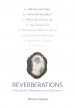
“Marion Agnew's Reverberations is a welcome, insightful read. Alzheimer disease is one of the several later-life mental health challenges that has been on a steady increase in the past decades. Most of us likely know someone who has the illness or families they have been—or are—dealing with the disease now.
Agnew straddled two countries, Canada and the United States during her developmental and maturing years. Most memorably were the times spent at her parents home in a camp in Shuniah. Later, she would return to this camp many summers and then on visits to check in with and support her parents as they aged, and her monther's health declined.
Jeanne Lecaine Agnew, Marion's mother, was an impressive woman of many achievements. She raised four children while simultaneously earning several degrees, becoming a renowned mathematician, professor and researcher. Marion chronicles all these milestones in her mother's life and then begins to tell us, with careful focus and personal vulnerability, how her mother steadily lost all those earned capacities.
Her mother dies. And then she dies again. As does her father. Reverberations is not about death per say, but the inevitable journey that takes us there. Agnew's book is a collection of finely toned essays. Each of them has a theme, a catch word that develops and then ends. So, like the Roshomon story, we get to see her mother's decline from several angles and perspectives, and at different time periods in Marion's own life. The chapters could be stand-alone essays. Here they are linked stories that are much like holding a precious object delicately in your hands and slowing examining its various aspects.
This makes from splendid reading. Agnew's writing is finely honed, using plain language, but rich in metaphor, complex paragraphs that propel the reader forward. Reading, I eagerly jumped from the conclusion of one essay into the beginning of the next.
There are no answers in Reverberations. Alzheimer's reamins a tragically unsolved medical condition. Abut Agnew gives us many layers of the confusion and vulnerability, the pain and love, of giving attention to what the illness does to someone. And how the ripple effects spread out amongst the rest of her family. And how deeply she, herself, digs down to make sense of what is happening.
Reverberations is rich in humanity, love and earned wisdom. Highly recommended.”
More Reviews of this title
“Marion Agnew is the author of Reverberations: A Daughter’s Meditations on Alzheimer’s, a collection of creative nonfiction essays published by Signature Editions (2019) and shortlisted for the 2020 Louise de Kiriline Lawrence Award for Nonfiction. Marion’s writing has also appeared in The Malahat Review, The New Quarterly, Prairie Fire, Full Grown People, Best Canadian Essays 2012 and 2014, and many others. Her essay “All I Can Say” was shortlisted for the 2009 CBC Literary Awards.
Marion and I first connected as fellow writers online, while I was living in Australia and she was living in my hometown. Upon moving back to Canada I made it a first order of business to meet her in person, and over the last handful of years we’ve had the pleasure of sharing coffee and conversation at a country cafe overlooking Lake Superior. The lake features prominently in Reverberations and has been such a big part of both our lives (we both spent childhood summers on its shores and have lived there as adults, as well). I’ve admired Marion’s writing and incredible intellect from day one, so it’s an honour to be able to help share her collection with you.
Reverberations captures portraits of Marion’s personal and family life from childhood to the present, focusing mainly but not exclusively on her mother’s cognitive deterioration due to Alzheimer’s disease. The essays are not presented in chronological order, as one would tell a story; instead, their order reflects the way life’s defining moments, both big and small, fit together like puzzle pieces.
I wanted to pick Marion’s brain about the particulars of her essays and collection as a whole, but I was also interested in learning more about her writing process, productivity, and publishing. No matter what you read or write, you’ll find some words of wisdom here to be gleaned from her experience.
For our interview, we corresponded by email and video chat (and also by good old-fashioned telephone when the Internet died).
Suzannah: So thankful to have you here, Marion! First, set the scene for us by sketching out a little about your background in writing and editing.
Marion: I have a B.A. with Distinction in English and an M.A. in Technical and Expository Writing. For my M.A. thesis project, I went to Los Alamos National Laboratory in New Mexico to compile a portfolio, and I stayed as a writer-editor and science education specialist for almost five years. My then-husband and I moved to Colorado, where I eventually landed editing at a publishing company specializing in computer books, both textbooks and how-to books. Since the late 1990s, I’ve freelanced, both editing and writing.
It’s been mostly an accidental career—I thought vaguely of non-teaching work at a university—but technical and science writing turned out to be peculiarly well-suited to my personality and interests. Journalism intimidated me—all that talking to people, asking them hard questions, Woodward and Bernstein stuff? No way. But working with scientists, engineers, and computer scientists to make their work accessible to nonspecialists was just fun.
Suzannah: I’m a terribly slow writer, so I found it encouraging to discover in the acknowledgements section of your book that you worked on this collection on and off for twenty years. Tell us about the book’s evolution: Which story was written first? At what point did you realize you were working toward a creative-nonfiction collection? What is the significance of the final order of the essays?
Marion: Twenty years, yep. For years, like every other working writer, I tried and failed to write fiction, and even nonfiction that wasn’t related to my work. I just didn’t have a story that felt compelling and I didn’t have independent work habits—deadlines drove my productivity.
And then, in the late 1990s, when I was in my late thirties, my mother got sick. I needed to write down what was happening, partly so I couldn’t pretend it wasn’t. Denial runs deep in my family. Also, I was learning a lot about dementia and Alzheimer’s and what my mother’s life might look like as her disease progressed. Writing down what I learned helped me cope. Writing down what I saw when I was with my parents felt really transgressive—a real betrayal of their privacy—but I needed to have that record for myself and for occasional talks with other family members.
Of course I thought of publication; I was a professional writer and editor. So I tried. Before Mom’s death in 2000, I found a couple of writing groups. I got some feedback on what I’d written, but I was still living the story, so the work itself was kind of a mess. I see now that I wanted to write personal essays but didn’t know what they were. I kept trying, though—I even tried weaving my mother’s recollections of her childhood with my own record of her last illness, and had a 300-page hybrid fiction/nonfiction manuscript at one point.
For the last year of her life and a few years after, I put all thoughts of publishing, and writing, away. She died in 2000, and after that my own life changed drastically in four years—that marriage fell apart and I knew I needed to move toward something positive and lasting. So I fulfilled a childhood dream of settling near family property on Lake Superior. My husband, who lived next door, was a bonus.
By 2005, I was in Canada and freelancing full-time, but I also had a filing cabinet full of all these WORDS about STUFF and I couldn’t let go. I thought about some obvious themes around which I might organize smaller pieces. A version of “Home,” what is now “Meander,” came first. Next, I worked on an essay inspired by a poet in Colorado, who’d asked me about Fancy’s funeral, which became “All I Can Say.” After that came “Words.” I sent them to literary journals, and they were received well.
Essay by essay, idea by idea, I groped my way toward a form that meshed my skills and the larger story. Luckily, many writers had stretched and experimented with creative nonfiction during this time, so once I found the labels “creative nonfiction” and “personal essay,” I could learn from reading their work.
I also wrote fiction during this time, practicing scenes and dialogue, and learning to revise my own work. In both fiction and nonfiction, I worked in short forms for a couple of reasons. For one thing, they’re easier to get feedback on than a long work. Also, part of growing as a writer of my own work (vs. writing or editing for others) meant publications and grants, and for me, short pieces were easier to work with and tailor to a grant proposal than a novel or book-length nonfiction.
At last, in about 2016, I recognized that I either needed to commit to these essays or just let go of all the WORDS about STUFF. I approached Susan Olding, an award-winning Canadian writer whose collection Pathologies helped me envision my own collection, about a mentorship. We discussed a bunch of books, both in terms of content and the essay form. She gave feedback on what was and wasn’t working of the essays I’d attempted.
That mentorship broke the dam, and I worked my way through most of the stories from Mom’s illness that I was ready to share.
The final order of essays follows, roughly, the events of her illness. In “Dripsody,” my mother didn’t yet have a diagnosis. Of course, many of the essays traverse the full length of her illness—as a reviewer said, Mom dies again and again. But because the book isn’t strictly chronological, I can consider events from different perspectives, and that also conveys a little of how that time felt. The essays echo a few features of the disease—repeating stories, fragmented experiences, unreliable memory, intense frustrations and elations, changing perceptions.
Because they were first published individually, the essays repeated information, which got tedious when they were in book form. But I felt strongly that I wanted the pieces to remain essays instead of recasting the manuscript as a memoir—I liked the mosaic it made. My editor, Karen Haughian (also the publisher at Signature Editions), suggested places to move and remove the repeated material, so essays are in slightly different forms than when they first appeared. After so long with all these words, I very much appreciated her perspective! To say nothing of her willingness to leave them, essentially, as essays.
Suzannah: What was your path to publication? Did you try to find an agent first, or did you go straight to publishers?
Marion: No agent. And I had some compunctions about publishing a collection at all—for one thing, both of my parents had died more than a decade before I began pitching it to publications, so how relevant was it anyway? And for another, a lot in society has changed since the 1990s (though not nearly as much as we’d like). Publishers are, rightly, choosing work by people with direct lived experience, rather than work by someone adjacent to an experience. I became concerned that in publishing my book, I’d take the place on the bookshelf of someone with dementia, or a care partner, who wants to write about their experience for the world.
But I decided to pursue publishing an essay collection anyway. For one thing, my mother—an oocher, pusher, and prodder from way back—would have wanted me to at least try. Also, my most recent essay, “Hours of Daylight,” had been recognized in a recent Prairie Fire contest and won recognition in the National Magazine Awards, which indicated the work held some relevance today.
I briefly considered publishing it myself, through Shuniah House Books, a publishing company that my husband and I manage together. But I was reluctant to. For one thing, I’m not the most courageous marketer. Praising my husband’s books is one thing; praising my own writing—and especially personal writing at that—is something else again. And besides, I really wanted the experience of working with an outside editor and publisher.
As for the “own voices” question, I eventually decided that I’m not a book market guru. I don’t know what a publisher would and wouldn’t be interested in, to say nothing of readers. So I decided to let the publisher decide about my manuscript. I’ve also become more involved in groups designed by and for people with dementia, in the past year or so. Coronavirus scuppered some of my plans, but I hope in the coming year to hold a workshop or two for people with dementia and their care partners, and to work with the Creative Nonfiction Collective to host a public event where they can share their work.
In terms of the submission process, I started with some information—none of it hopeful, but valuable.
The 2018 annual conference of the Creative Nonfiction Collective included a session at which agents and editors at the major international Canadian houses provided feedback on the first few pages of manuscripts, submitted by those attending. One brave person shared early pages about undergoing tests for early-onset dementia, and the response from the panel was complete silence for an uncomfortable minute. Then one publisher said that the market for medical memoirs was already flooded, and beyond that, publishers “wouldn’t touch a dementia story with a ten-foot pole.” One of the other publishers said that she just hadn’t found the “right story” yet and publishers in general weren’t sure what that story might be.
They also indicated that the memoir form—a long narrative that reads like a first-person novel—is easier to sell than collected short works. And personal essays, which combine memoir with (technical term alert) “thinky bits,” can be even more difficult to sell.
I felt strongly that I didn’t want to recast my personal essays into a long narrative manuscript (again). The interesting part of my work wasn’t the outcome of my mother’s illness, which was a foregone conclusion. Also, everyone’s parents die. Instead, the fractures and insights my family and I gained along the way were the important part.
So at this point I knew not to bother approaching an agent or any of the major publishers in Canada.
My best strategy was then to submit to smaller Canadian publishers. There, too, I had information. The Ontario Arts Council has a Recommender Grant program in which publishers support manuscripts they think are worthy of publication. I’d applied in that program and none of the Ontario participants had supported my collection.
So I went to lists of Canadian literary publishers and started researching. I chose my first ten and went into more depth. Each publisher has different requirements, and most of them wanted me to be familiar with the books they’d already published, which meant reading their recent backlist. Many also ask authors for “comps,” recent comparable titles, from the greater marketplace. Some publishers want one chapter, some want ten pages, some want fifty pages, some want a full synopsis, etc. Over the course of a couple of months, I submitted to ten publishers and waited for the rejections to come in.
I was down to three active applications when Signature Editions (small literary press in Winnipeg) contacted me to offer. After ensuring that they didn’t want me to rewrite my essays as a memoir, I felt that they were a good match. I contacted the other two publishers and happily signed with Signature. And I’ve benefitted so much from their insights and infrastructure.
Suzannah: There are all kinds of interesting connections, symbolism and metaphor in your work. In “Dripsody,” for example, from a leaky roof at your family’s beloved cottage you draw out a fascinating story about your uncle Hugh LeCaine, who was “a pioneer of twentieth-century electronic music,” famous for his composition based on the sound of a single drop of water. In “Nulliparous” you artfully and candidly connect the notion of whether or not one is “doing menopause right” to wildly contrasting opinions on the secret to making the perfect devilled eggs. In terms of writing process, how do you go about making such connections or layering your work to make it richer? Do the connections come first and inspire the writing, or do you discover them organically through the drafting process?
Marion: It varies—sometimes the pieces of an essay find each other almost immediately, and sometimes the theme doesn’t emerge until I “finish” several drafts and receive feedback.
“Dripsody” was fairly quick—the remark by Mom about the drips, plus the symbolism of a leaky roof (which was a real feature of that structure) and her life disappearing, drip by drip—came together in its second version. Similarly, the pieces of “Nulliparous” were all hanging around together in my brain, commenting on each other. That one seems less about my mother than some of the other essays, but it stemmed from my bewilderment at all the times and spaces I still miss her and the life milestones I wish we had together, as well as my ongoing feeling that I’m not “doing it right.” Also, I wrote a lot while menopause kept me awake and crabby.
In contrast, “Atomic Tangerine” was a journey. I wanted to write about something other than my mother, mostly my love of the place we live and the natural world. I spent significant time on drafts that just didn’t work—they lacked life. One of my writer-friends said, “This really wants to be about your mother,” and she was right. (I had to whine a bit before I believed it.) When I remembered the story about Mom’s name, which I’d had to cut from another essay for length, I knew I was onto something satisfying.
Suzannah: Several of your essays are segmented in a variety of ways—with asterisks, Roman numerals, equations, acts, and even the unconventional *0*. The image on the book cover also includes a fading list of subheads from the essay “Let d Be the Distance Between Us.” Is there a reason you’re particularly drawn to structuring your essays this way?
Marion: Somewhere in my mentorship with Susan Olding I became enamoured of braided essays. The form lets you consider several different-yet-related subjects in alternating sections. And you don’t have to write transitions!
Partly, I find that clean breaks, with or without specific dividing characters, help me revise: “Oh, right; this is the section about that.” Partly they’re useful for visually breaking up text on a page, which can help make nonfiction more reader-friendly, in both print and online publications. Partly they keep me from flat-out saying to the reader, “Here’s what I want you to think about that.” Just setting sections near each other, in a particular order, lets the reader draw their own conclusions. And partly it’s kind of how my brain works, I think—in flashes of connection.
I loved having fun with the breaks, too: the *0* for eggs, parts of equations, phrases.
I’m trying to expand my horizons beyond braiding, because nonfiction can be delightful in many forms. Brenda Miller and Susan Paola coined the phrase “hermit crab essay” to describe nonfiction that takes on a form other than the expected prose paragraphs—for example, a recipe, a math problem, a field guide, a course syllabus. Ideally, the form adds to the discussion of the content in some way, like an essay-as-course syllabus might describe a learning experience.
Recently I drafted an essay that really wanted to be braided, and I’m afraid of making braided essays my crutch so I’m resisting working on it. Apparently my inner writer is a toddler.
Suzannah: I found a lot of the dialogue in your essays quite strong. For me, dialogue is difficult to write. It often sounds contrived, and I find myself tending toward writing too much indirect dialogue, which ends up having a distancing effect on the reader. What have you learned over the years about how to write effective dialogue?
Marion: It’s easier to write dialogue when people have actually said the dialogue you’re writing down—not that I’m claiming every word of dialogue in Reverberations is exact transcription. But Mom and I had the conversation with and about her students many times. And I did take verbatim notes while I was visiting my parents, and I wrote scenes soon after the fact, to retain as much of the words and tenor of the encounter as I could. The years of her illness were such an intense time that I had vivid recall of different events for years after, even after I’d written them.
In fiction, it’s harder. I used to assemble characters around a table and let everybody say exactly what I needed them to say, and then I’d wonder why the story felt flat. That’s not really how conversations work. People speak around a topic. They don’t answer questions. They change the subject. They ignore the barb behind the words, or they find a barb that wasn’t intentional. They don’t talk using words—they communicate by turning away or staring. Or they stay silent on purpose and that says more than dialogue or indirect speech. Knowing the characters seems to be key—but it’s a skill I’m working on, still.
Suzannah: In addition to creative nonfiction, you’ve also published short fiction. Is your writing process in these two genres similar or different? If there are writers reading this who write exclusively in one genre or the other, what benefits would you highlight to encourage writers to explore the other?
Marion: For me, the writing process for both is similar in that I get obsessed with an idea (for example, why are names so important in our culture? Or what if a character decides to walk to the mall, who IS he and what’s THAT about?) and live with that for a while. I write bits and pieces while I figure out what’s happening (the “why?” is important). That mulling continues through a few early drafts, while I’m learning the story, tightening the connections among ideas, or finding that key point.
But the revision process is different for fiction and nonfiction. In nonfiction, I’m stuck with what happened. I’d say “for better or worse,” but it’s definitely for better. In fact, I lean into the ways in which what really happened wasn’t what I WISH had happened. Real life is uncomfortable. Even moments of connection and calm can be short-lived. Imperfection and discomfort give readers permission to be imperfect in their own lives.
With a short story (or my novel that’s been on the go for a dozen years), I keep forgetting that anything is possible. I find myself reading along going, “Yep, here’s where she goes outside,” without considering that maybe it’s where she throws a plate instead. I cling to branches of plot that don’t serve the story anymore, because they’re familiar. That’s why I’m looking forward to this summer, when I hope to take another pass through my novel with fresh eyes.
So, adhering to “what happened” in nonfiction could perhaps apply to plotting in fiction—try to make plots more uncomfortable. I’ve had fun practicing dialogue in fiction, and for examining where scenes can begin or end, which is also helpful for nonfiction.
Suzannah: Most of us are still trying to navigate life during the coronavirus pandemic. In what ways have your writing and reading life, process and promotion been affected by what’s going on in the world? Do you have any advice for writers who may be struggling at the moment?
Marion: I was set to present a panel and celebrate my book at the Creative Nonfiction Collective annual conference in early May, and that opportunity disappeared. But I’ve been very impressed and encouraged by the quick pivoting in the creative community to online everything: launches, readings, and other celebrations.
As for coping—well, we’re fortunate. Roy (my husband) and I have more than a decade of experience living in the country, just the two of us. We still worry about family, but overall, we’re secure.
Like most people, I’ve had trouble focusing since lockdown. So I go back to basics: routines, deadlines, lists. Short bursts (the 25-minute “Pomodoro” technique) help me get through daunting projects.
I have to be careful between projects. I can’t rely on what I “feel like” doing or what “has to” be done, because so much has changed and deadlines have evaporated. Currently, Roy and I are revising his spec-fic novel (Iterations of Caroline, about the multiverse) for publication this summer by Shuniah House Books, our publishing company. I keep a list of tasks so that when I finish one (a chapter-by-chapter summary), I know what my next task is (draft back cover copy).
I also work on a variety of small tasks during the day, instead of doing just one thing all day. More boxes to check!
Overall, I’d suggest that people do what they can, where and when they can. Write about the pandemic, or don’t, but maybe people could consider keeping a calendar or just hanging on to their to-do lists—it’s an interesting time.
Suzannah: Any new projects in the works or publications on the horizon? Where can we read more of your writing?
Marion: Nothing new, sadly. Since March 2019, when Signature Editions contracted my essay collection, I’ve been working mostly on revisions or publicity for that, plus another draft of my first novel. I’ve enjoyed taking a year or so off of submitting short work.
As long as I’m editing and packaging Roy’s novel, I don’t have much space in my head for my own. I’ve dusted off short pieces and early drafts, both fiction and nonfiction, and I’m revising those and submitting them. It’s possible to do in short bursts. And as Roy’s novel moves through the process, I’ll go back to my own novel—I’ve received good feedback and am one revision away from submitting it. Or so I hope!
Suzannah: Thanks so much, Marion, for taking the time to share all these insights with us. Readers, you can learn more about Marion and find her full list of publications at www.marionagnew.ca. You can also read her essay “Bypass Instructions” and blog post “The Story Behind Bypass Instructions” at Compose, the literary journal I founded in 2012.”
Read the full review at Write It Sideways.
“On a summer day in 1992, my mother told how, more than forty years earlier, my then-baby brother broke his leg. Then she told it again. She told the story four times in one hour, in fact.
But my father and I didn’t talk about it. We couldn’t—not yet, for many reasons.
Because my mother, a retired mathematics professor who’d earned her PhD when few women even attended undergraduate school, had always identified with her intellect, her ambition, her drive. Without that, who would she be?
Because my father’s ability to cope in the day-to-day depended on denying that anything was wrong.
But mostly, because of stigma. People in my parents’ community were uncomfortable with dementia, which increased my father’s embarrassment and isolation, and my mother’s loneliness.
In 1997, my mother’s family physician finally diagnosed Mom with “probable Alzheimer’s.” Even then, it took months before eventually—carefully, gently, fearfully—my father and I began talking about twin taboo subjects: health and money.
I lived 800 miles away—close enough to visit my parents every couple of months and be free with unsolicited advice, but too far to be of actual help in their daily lives. Each time I left, I wanted to tell myself, “It’s not so bad.” I needed to soothe my guilt at leaving them. But I knew better.
After Mom’s diagnosis, I wrote about what I’d seen and about the disease itself. I tried to make concrete the general words to describe symptoms like “confusion” and “agitation,” by describing my Mom and our interactions.
After her death, I gained some distance from Alzheimer’s. I drew closer to my father. I began to see the time of her illness as only one part of their lives.
And because I was a professional writer, I kept writing. I tried for years to find the right format in which to tell the story—Mom’s, mine, our family’s—and what I’d learned.
At last, I found personal essays, a form that allowed me to write both “in the moment” of Mom’s illness and in my years-later “now,” with the hard-won wisdom I’d acquired as time passed. I still write, often about the sometimes-surprising moments when I miss both of my parents again, years after their deaths. Over the years, I published essays in literary journals. Some received recognition.
At last, I felt ready to rejoin the conversation around Alzheimer’s and other dementias. Signature Editions released my essay collection, Reverberations: a Daughter’s Meditations on Alzheimer’s, in October of 2019.
I hope readers see that people with dementia and their care partners remain people—unique individuals, with lives that include joys both big and small. I hope readers understand that while a family’s emotions can include guilt, anger, and embarrassment, they can also include love.
I hope that somewhere, a reader gives my book to a friend, and they start a conversation. Because talking about Alzheimer’s and dementia is how we create a more understanding community for all of us.”
Read the full review at Alz Authors.
“CNCF member Marion Agnew is an editor and writer who lives and works in Shuniah, Ontario, just outside of Thunder Bay. Her new book Reverberations: A Daughter’s Meditations on Alzheimer’s has been praised for its honest and contemplative discussion of dementia. Recently CNCF’s membership coordinator, Lesley Buxton, talked to her about process, mentorship, and writing.
Can you tell us about the title of your book, Reverberations: A Daughter’s Meditations on Alzheimer’s?
A reverberation is a complicated echo—one sound echoing more than once, or perhaps many sounds echoing at the same time. The essays address not only the time of my mother’s dementia, twenty-plus years ago, but her lingering, ever-present influence on my life. I wanted to capture that somewhat confused sense of time happening all at once. And the subtitle is just to give a potential reader some clue as to what to expect inside.
I read an interview with you on the AlzAuthor’s website where you said, it took you years to find the right format for this story. Can you describe this process for us? Why essays?
It’s kind of a saga. At the time of my mother’s illness, I was in my thirties, some twenty years younger than most people I met whose mothers had dementia. I felt alone and bewildered, and so I wrote what I saw, in scenes and narrative and some reflections on what she’d been like when I was a child. My background is in technical and science writing, so I explored dementia research and wrote several “here’s what happens in dementia”-type pieces, which went into a drawer.
At various points in the late 1990s, I also had several hundred pages of memoir-style narration. At one point, I also had a hybrid fiction-nonfiction manuscript. My mother had written stories of her childhood in Canada. I set those stories in scenes and paired them with events from her illness that related to those stories. Mom was alive during this time, though increasingly frail and unreachable.
But the whole enterprise of writing about Mom’s dementia felt like kind of a mess. I took manuscripts to a couple of workshops. Nobody knew what to say about the work, except that it wasn’t fun to read. It wasn’t much fun to live through, either. So I put away the manuscripts and tried to support my father, who was mom’s care partner, plus be present in my increasingly complicated personal life.
Mom died in 2000. By 2004, my marriage had fallen apart and my childhood dream of living near our summer camp asserted itself. So I moved to Canada. (One of my friends referred to this, with envy as well as amusement, as “running away to join the circus.”) I became a permanent resident in 2005. My father died in April of 2007, and I was so grateful to have seven years to get to know him after Mommy died. I married that summer.
I began pursuing creative writing, both fiction and nonfiction, more seriously. I recognized the value of writing short pieces—they can feel more manageable to revise than a book, and literary journals publish some, which gives you a sense of whether you’re successful in conveying your meaning to an audience. Working in short forms gave my writing life valuable structure. I returned to the manuscript morass and looked for themes—beyond the narrative of what happened—to help me organize what I wanted to say. And thus personal essays turned out to be a form that worked well for me, at that time.
You were mentored by long-time CNCF member, Susan Olding. In what ways do you feel this influenced your writing?
Susan Olding was a godsend. Until we worked together, I created essays largely by trial and error. I’d throw some ideas onto a page and see if they held together. Usually they didn’t. I’d cut a lot and add different things, not quite at random but almost. The process was frustrating, because I was used to structure and moving forward in recognizable stages.
Susan helped bring some order to that chaotic process. Together, we looked at what other people did in various essay forms, in works about parents and place, and in essays about dementia. She gave invaluable feedback on my manuscript of “everything that might be related to my mother,” and her comments and support confirmed that I was learning to be intentional in writing and revising.
My writing process is still nonlinear and it’s still sometimes frustrating, but that’s how it is, and Susan helped me be okay with that. She’s a master at supporting work and contributing insights without saying, “Do it this way.”
This book required you to move back and forth in time. How did you do this?
I didn’t really have a choice about going back and forward in time—time passed, tick tock. When I began again to write about Mom’s illness, time had provided a cushion that made it easier to revise and provide context for those earlier scenes. Accumulating one, two, five, ten, thirteen years without her helped me gain perspective.
I live now on Lake Superior in rural Thunder Bay, near where she (and I) spent childhood summers and where she grew up. When I walk the cliff path that Grandpa built in the 1920s and pass the giant tipsy boulder that’s been there all this time but hasn’t yet fallen, Mom’s voice might comment in my ear. But I also live in the “here and now,” as on the recent evening when I recognized that animal waddling along ten yards ahead was a skunk. (I turned back.) The reverberations of Mom’s life (and my father’s, and others’) are present if I choose to listen.
Where do you like to write?
I have an office, with a lovely desk and computer and filing cabinets, in our walkout basement. An upstairs bedroom holds my most precious books and too much craft stuff. So of course I write mostly on my laptop at the dining room table. And, as writers apparently must, I revise in coffee shops when we’re not in a pandemic.
You write both Fiction and Creative Nonfiction. What do you get from Creative Nonfiction that you don’t get from Fiction?
I love creative nonfiction because you have to stick with what happened, or what’s factual, or what’s “true,” or some combination thereof. On the page, you can argue with it, or question it, or wish it didn’t happen, but you have to reckon with it somehow.
And I love fiction because anything can happen. I love asking, “How can this person’s life be more expansive or more difficult, and how can she try to bring her best self to bear?”
Can you tell us what you’re working on now?
I’m revising my first novel and pulling together pieces of a new one. And fiddling with essays. And staring out the window—that’s writing too, right?”
Read the full review at Creative Nonfiction Collective.
“Marion Agnew didn’t want to write about her brilliant, often formidable, mother. Instead, she wanted to save her. But as it became clear that was impossible, she began to write, searching for ways to understand and accept her mother even as the person she’d once been began to disappear.
This is the crux of Marion Agnew’s book, Reverberations A Daughter’s Meditations on Alzheimer’s. In spare and unflinching prose, she takes us on her unwanted journey as her mother, Jeanne LeCaine Agnew, succumbs to Alzheimer’s disease
At the age of six, when asked to repeat a simple sentence about the shape of the earth, young Jeanne announced that the earth was not round, but was “an oblate spheroid.” That precocious girl earned a Ph.D. in mathematics in 1941 at Radcliffe, the only part of Harvard then available to women. She went on to work on Canada’s wartime atomic research project, become an award-winning university mathematics professor, and have five children.
In twenty short essays, Agnew shows us “all the women my mother has been.” We see her at her beloved camp on Lake Superior, when she laid down a hard rule for her children to always chain the rowboat to a tree. She shows us a mother who could be demanding and critical, someone a friend in high school told her was “the meanest mom ever.” Someone who, when her child received a score of 99 percent on a test, would ask, what did you miss?
Most people, Agnew points out with blunt honesty, don’t think about Alzheimer’s at all if they can help it, and hope that if they ignore it, it will go away. She admits that was her hope too, when in her thirties, she learned of her mother’s diagnosis. But as she reads that a “minimental status examination reveals a dismal score of 5/30” – probably one of very few tests her mother failed, she wryly notes – she realizes she can no longer ignore what’s happening to her mother. By then, this strong woman had become someone who could hug her daughter warmly at the end of a Christmas visit and say, “I’m so glad you came. After all, you’re my favourite paper.”
In spite of that startling statement, Agnew clings to a faint hope that she will find a way to save her mother. As she holds a garbled Christmas card, that “trembling in my hand, showed me her disease – right here, blue ink on white paper,” Agnew describes how difficult it is to accept the finality of the diagnosis. When her mother begins to wander, walking through her once familiar university campus to the highway that leads north to her beloved first home on Lake Superior, Agnew lets that small flame of hope flicker. She will take her mother to their camp on the lake. She knows this won’t make her well, but a small voice inside her whispers, “Anything can happen. You never know.”
It is the letting go of that hope, and its replacement with something more fundamental, the acceptance of who her mother has become, and continues to become, that makes this book so affecting.
In “Let d be the distance between us,” Agnew recalls her mother, ever the teacher, showing her how to solve a mathematical word problem by breaking it down into simple steps:
If the speed of the train is 60, write down s = 60.
Let t be the time, so t = 5 hours
x means the thing we don’t know, the distance, d, the train travels.
Once you set up the problem correctly, it’s just work to solve it.
After a long distant call where Agnew struggles to make sense of what her mother is trying to say, she resolves to help herself:
So, I’ll start by writing down what I do know. Maybe then I’ll be able to frame the problem correctly. After that, it’s just work, and I’ll do what I have to do – accept even more changes in my mother, until all the women she has ever been exist only in photos and in memories. Solve for d, the distance between us, as long as I can.
For anyone who has witnessed a parent succumb to Alzheimer’s disease, Reverberations is a poignant and eloquent tribute to the power of paying close attention, to staring hard at the thing we wish with all our heart would go away. To solving for d as long as possible.”
Read the full review at Prairie Fire.
“Mother's decline challenges author
Alzheimer's disease and dementia have become fairly common topics in contemporary arts, with a variety of novels, memoirs and films that deal with these illnesses, which are affecting a growing number of people each year as our population ages.
Marion Agnew, an American who now lives in northwestern Ontario, tackles her family's experience with Alzheimer's in her memoir, Reverberations.
She details her struggle in coming to grips with the fact that her brilliant mother, Jeanne—a former mathematics processor—is finding her intellectual capacity gradually diminished. Agnew, her father and siblings are stunned by the implacable nature of the disease that can claim the mind of such an intelligent woman.
"In recent days, my mother has turned to me with childlike trust when she feels overwhelmed by all the strangers in her house, strangers who are her own grown children and her young grandchildren. Her guard is down; she is vulnerable. At least, she needs me."
Jeanne's family has owned property next to Lake Superior for decades; the generations have spent most summers there, with Angew's own family travelling north from Oklahoma each year. The large and small camps (cottages) are an essential constant for her family, so despite her mother's growing confusion and anxiety, Agnew and her father decide to take Jeanne to the lake.
Agnew believes that being in a much-loved, familiar place amid nature's beauty will help her mother relax and feel at peace. However, Agnew discovers that her mother is no longer able to remember all the summers she spent swimming and paddling in the lake, or the love she once felt for this vacation spot.
While Agnew finds it very difficult to reconcile her mother's decreasing capacities, she's also dismayed by the anger her father—a retired history teacher—shows toward her mother. "My father was angry: at the illness, at himself for not being able to cure her, at her for slipping away. He was angry at me for bearing witness to his short temper, for suggesting he comfort or indulge her when his inclination was to argue her 'back to reality'—a trip she could not make."
After her mother dies, Agnew forges a new bond with her father. While growing up, she never felt very close to him; as an adult, she is able to learn more about his life and appreciate his company when they spend time at the lake.
"Our sadness drew us together. I developed a respect for Dad's routines—even his index cards and ball-point pens—as I watched them help him befriend grief and carry on for the seven years until his last illness."
Her mother's death also gives Agnew insight into her own struggling marriage, and she decides to end it. After doing so, she moves from Arizona first to Thunder Bay, then to the family cabins. In trying to figure out what work needs to be completed on the two buildings to keep them in use for her family, she falls in love with Roy, who owns the cabin located between her two family cabins. Now living at the lake year-round, she gains an appreciation for the changing seasons.
In sharing her family's joys and sorrows, Agnew writes from her heart. Reverberations is a very personal look at how a daughter's life is shaped by her parents, siblings and the world around them.”
Read the full review at Winnipeg Free Press.
“Marion Agnew’s, REVERBERATIONS: A DAUGHTER’S MEDITATIONS ON ALZHEIMER’S—a collection of personal essays about Agnew’s mother’s dementia, her family, and how her parents’ lives still influence hers—was recently released by Winnipeg publisher Signature Editions. It includes “Entanglement,” which appeared in The Atticus Review on June 21, 2018. Described by Canadian essayist Susan Olding as “as honest and bracing as the breeze off Lake Superior, as luminescent as a vein of quartz,” REVERBERATIONS is about Alzheimer’s and parents—and much more. Because people with dementia often feel unsettled and ask to go home, “home” is an underlying theme in these essays, as are music and family and Lake Superior. Agnew’s creative nonfiction has been nominated for a National Magazine Award and a Pushcart Prize and has appeared in literary journals in the US and Canada. REVERBERATIONS is available to order wherever books are sold and from the publisher, Signature Editions.”
Read the full review at Atticus Review.





 Back to top