
Review of St. Boniface Elegies
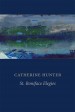
“Return to poetry reveals a new appreciation for formal elements
Hunter explores the impossibility of returning from a path of grief
St. Boniface Elegies is Winnipeg writer Catherine Hunter’s fourth book of poetry and her first since 1997’s Latent Heat. In the intervening years, she’s published five novels, most recently After Light.
Although more than 20 years have passed since her last book of poetry was published, Hunter has never stopped writing poems, “but it wasn’t until recently that it seemed there were enough like-minded poems to make up a book,” she explains.
The poems in this collection showcase Hunter’s craft: “I’m more aware of formal elements in poetry than I used to be,” she says about how her approach to writing poems has changed over the years.
Animated as they are with grief and the anticipation of loss, the poems in St. Boniface Elegies are fierce and intense. Their lines and images stick long after the book has been finished.
For Hunter, a focus on visual images bridges the gap between the intense experience and the process of making art about it: “In ‘The News,’ I rely on visual memories of the summer of 2016, when my partner, Ron, was treated for cancer. I felt we’d suddenly been transported into the future and, seeing the ends of our lives approaching, began to recall images from childhood. I was haunted by the concept that we’d gone too far, we were way beyond where we should be, and that made me think of the NASA space program.”
The images Hunter uses contribute to a sense that these poems are always moving – in time and in space, in imagination and in memory. “Many of us have a home in our imagination, a place we long to be, even if we’ve never been there,” she says.
“Possibly that’s the human condition. Possibly art takes us there, briefly from time to time, and connects us to a sense of belonging.”
Part of the work of these poems is to claim the complexities of grief from a tradition that oversimplifies them and appropriates them for aesthetic purposes. “For what I’m losing, / I am losing here, on Earth, not in those other worlds, that other side / where you have so poetically dissolved. Leave me my imperfect troubles, / my empty bungalow, my dusty books,” she writes in “The Haunting.” This is one of a few glosas in the collection, which are poems structured around four lines from another poet, in this case Rainer Maria Rilke.
“I love Rilke’s elegies,” Hunter says, “but his romantic attitude toward women’s suffering, the way he aestheticizes it and makes it beautiful, sometimes seems parasitic. I like talking back to him through the glosa form because my own lines are literally between the lines of his poem. Feels like I’m talking to him from inside his poem, which is a place where I’ve spent a lot of time.”
The collection does not yield the coherent narrative commonly associated with grief that begins in denial and resolves itself in acceptance. “I don’t believe we ever get over huge permanent losses like the death of someone we truly love,” Hunter says. “We never get back to who we used to be. And we never return to the world we once knew.””
More Reviews of this title
“In many ways, Catherine Hunter’s book, St. Boniface Elegies, represents an incredibly personal journey.
Hunter, who lives in St. Boniface, is on the short list for a Governor General’s Literary Award in the poetry category. Her book, which was published by Signature Editions, was released in the spring.
Catherine Hunter has been nominated for a Governor General's Literary Award in the poerty category.
Along with Joan Thomas and her fiction book Five Wives, Hunter is one of two writers currently living in Winnipeg nominated for one of this year’s prestigious awards.
"I’m very glad to be on the short list," said Hunter, who is a creative writing professor at the University of Winnipeg. "I’m very grateful that they paid this attention to my book. It’s good for poets to have our work read."
St. Boniface Elegies "traces a poet’s relationship with her family and her community through poems about travel, love, illness, work, and the writing life."
The book comprises of four sections — Submission, Winter Archive, The News, and The Reader. The life-changing impact that her husband Ron’s terminal illness diagnosis and death last year is at the core of the work.
"It’s a personal journey, and St. Boniface Hospital plays a role in the book," Hunter said, adding the section called The News explores the couple’s life together, and Ron’s illness and diagnosis. "This is at the heart of the book."
When it comes to what inspires her to write, Hunter said she has "always wanted to capture certain moments in life."
"Whether it’s joyful or soulful, I’ve always paid attention to the world in which we live, and the experiences that we share," she said.
Noting that she’s grateful to Signature Editions for supporting her — "I really appreciate them believing in me" — Hunter said imparting knowledge and support in her longtime role as a creative writing professor has been a natural complement to her own writing.
"It’s the best job in the world — and you can’t do it if you’re not a writer. It’s great to be able to experiment with my students and talk to them about the process, as well as share my experiences with them. I feel very fortunate to have this position."
Hunter also offered an interesting insight into the comparison between writing full-time and part-time.
"When I was younger I used to think how great it would be to write full-time, but now I think that wouldn’t allow me to be as free to write what I want, so I think I’m in a good position," she said.
The awards consist of are seven English-language categories, seven French-language categories. Each winner will receive $25,000, and the publisher will receive $3,000 to promote the winning book. Finalists will receive $1,000 each.
The award winners will be announced at ggbooks.ca on Oct. 29.”
“Catherine Hunter’s new collection, which was recently shortlisted for the 2019 Governor General’s Literary Award for poetry, blends existential inquiry with reflections on a lifetime of artistic engagement as a writer. St. Boniface Elegies delves into genealogies—personal, collective, artistic—and strives to show life and death as two sides of the same coin. As we are living, we are also dying.
Comprising four sections—“Submission,” “Winter Archive,” “The News,” and “The Reader”—St. Boniface Elegies is characterized by a momentum that slowly builds, garnering weight and gravity through the collection of details belonging to the realm of the quotidian. “Submission” firmly grounds this testament to a life lived. A journey to Ireland to connect to maternal roots; a holiday in Provincetown symbolizing rebirth; health complications in the idyllic Banff, local par excellence for creative work; communing with daughter over an exhibit at the art gallery; detailing the anatomy of the university campus, place of learning and knowledge—all these places and experiences coalesce to create the architecture of a life. Although familial, artistic, intellectual, and emotional connections form richness of substance and materials, a clear sense of foreboding pervades. To the philosophical question posed by the young daughter in “After Rain,” the speaker replies thus:
[…] The time has come
to tell her how we got here,
but she’s grown up, left home.
Who am I and what do I own?
A house and bones, a glimpse
of the blackbird’s wing, the wind’s dark rush,
and after the last breath, wilderness. (12)
Similarly, upon “Arrival” in Dublin, the speaker affirms: “Mum, I said, I made it, but by then / my mother had already given her body / to science and would not answer” (16). The idea that one has perhaps arrived too late is also found in the artistic pilgrimage of “Irish Studies” whereby the speaker observes the following items-cum-relics:
James Joyce’s flat black wallet strapped into a glass case
abandoned, as if he couldn’t take it with him
And what do Brendan Behan’s eyeglasses
see at night, when they’re all alone in the museum? (18)
It is in such lines as these that the other side of life, death, begins to make itself known.
The collection turns, however, on the last poem of this first section. “Oodena” places the reader at the confluence of two historic rivers: the Red River and the Assiniboine. The Oodena Celebration Circle referenced in the poem is the amphitheatre named after the Ojibwe word meaning “heart of the city”:
At Oodena, George plays ‘Maple Sugar’
on the fiddle. Across the river, the neon
cross above St. Boniface General marks
the site our daughter first appeared to us,
the place I touched my mother for the last time.
Ran my fingers through her hair. (35)
Within this poem and throughout the rest of the collection, the city and the hospital are the places of meetings, embodiments of the va-et-vient of our temporal human existence. We gather together for a time, and then we disperse.
At the centre of town, three waterways
converge, like my two brothers and me,
each entering the hospital on the same night
through a different door, wandering
our separate corridors through the labyrinth
until gathered once again into our mother.
Only her beautiful body at rest in a room
and a stranger saying a prayer. (35)
City as meeting place is perhaps most clearly seen in the poem “Winter Archive” which, in some ways, can be read as a companion piece to “Oodena.” Also the title of the book’s second section, the poem “Winter Archive” appears last, deepening the sense of mortality and passage of time as the speaker affirms: “[…] you can’t recover / all the overlapping cities that you’ve lost” (54). Similarly, the poem “Landmarks” reinforces the experience of city as palimpsest where “Multiple grids / of your hometown overlap in memory”:
You pass the bookstore that was once
a music store, the empty lot that was
your father’s office. You pass the school
for ballet dancers that was once an old hotel
where you drank beer with Patrick, who once
was Patrick. And behind that hoarding
on the south side of the avenue, what belonged
there? The library’s been erased, redrawn. (48)
The final two sections of the collection, “The News” and “The Reader,” are characterized by a deepening sense of impending loss and an intensified search for meaning and solace in artistic endeavour. The glimpses of death hitherto caught through the images of the mother, time’s passage, and subtler references to the husband that thread their way throughout—“[…] Receive him gently,” implores the speaker of the collection’s first poem, “as he’s not the person you’re expecting” (11)—culminate in “The News” with a diagnosis of cancer. Stylistically speaking, this section works much like the first section of the book whereby an assemblage of places and experiences serve as the beams, joists and columns that lift up the whole structure. With its series of abstract and categorical titles such as “Romance,” “Liberty,” “Justice,” “Collision,” “Education” and “Collaboration,” “The News” (title of last poem as well as of the entire section) takes firm hold of the materials, so to speak, of life. The artist interrogates, manipulates and renders the categories particular. Indeed, these different categories merge together in some of the collection’s most striking images:
[…] Meanwhile, you’re five miles from here,
shuffling through hospital corridors, attached
by rubber tubes to an IV pole, an astronaut
too loosely tethered to the ship […]
[…] Radiation, says the doctor, is just sunlight.
She tells us how precisely they will aim the beam
into your brain. Long ago, my fourth-grade teacher said
the sun is ninety-three million miles away, and we can never
escape the atmosphere of Earth because of gravity. (58)
The way in which the different categories and materials of life are reshaped and reformed is accompanied in characteristically nuanced fashion by the recurrent imagery of birds and flight in the collection. Blackbirds, a soaring eagle in Banff, sparrows and songbirds at the backyard feeder, and even the news that “[…] they’re dying—from pesticides and cats and loss of forest / habitat and fatal light attraction” (66), help to sustain a sense of release and possible freedom. Free to roam above and below, birds have symbolized a link between heaven and earth, and represented a kind of eternal life.
While this release and freedom is felt in relation to the collection’s meditation on mortality and the human lifespan itself as collective meeting place, it is also juxtaposed with the act of creation. While a thematic thread throughout, the subject of artistic endeavour as life pursuit is brought into full view in the final section of the book, “The Reader.” What has art and the struggle to be an artist really meant? With the same intimate tone and depth of inquiry that defines the rest of the collection, the ten poems of this section take the matter up, uniquely combining the seemingly disparate. “Reading Treasure Island” brings together the realm of art, worldly adventure (which is so often reserved for male protagonists), and the quest of a young married woman to find her independence; “Reading Strangers” parallels the interior life and home of the speaker with the characters of an Anita Brookner novel; “Concerning Mr. Purdy” seeks to redeem the poetry of Al Purdy if not the poet; “Haunting,” one of the three glosas that close the collection, takes Rilke to task via late-night interrogation:
[…] Dear Rilke,
can we say who turned to whom tonight? When gripped
by wild insomnia, I opened up your books and hoped
to unlock sleep. Instead, I found there words that deepened
my own grief. And when I rose to sort the midnight laundry,
wash my absent husband’s socks, you followed, taking notes
on wifely chores, the pitch and pulse of female loneliness.
Was this how you practised to describe those numinous figurines
who glide across the landscape of Lament? (88)
The work of creation has, for the woman-as-artist, necessarily meant carving out a different artistic space and existence from male counterparts. And it is in this space that the speaker continues to reaffirm: “Let us each compose our elegies, you on the windy bastions of Duino / Castle, me in the coffee shop of St. Boniface General Hospital. Let / my ordinary language live between your lines. For what I’m losing / I am losing, here, on Earth […]” (89).
St. Boniface Elegies is richly textured, with several different strands of subject matter coming together in complex ways. In addition to its requiem, the collection simultaneously evokes connections between the natural world, the cosmic realm, and human existence in an almost cartographic enterprise. This facet of the collection is tinged with a Borges-like quality and brings the well-known line of Italo Calvino’s Invisible Cities to mind: “Cities like dreams, are made of desires and fears, even if the thread of their discourse is secret, their rules are absurd, their perspectives deceitful, and everything conceals something else” (44).”
““Who am I and what do I own”; “Will it weigh you / down? Leave you light?” are the central I and thou inquiries of Catherine Hunter’s latest collection of poetry, ST. BONIFACE ELEGIES. Asking such questions requires humility and to have “surrendered everything at the door.” Following from that line of reasoning, “Submission,” the opening poem, conflates the submission process for a writer with the consideration of elements of the natural world: “I submit, for your consideration, / the cold, deep water, the rocky beach, the black lake sharpening / its waves against the shore.” So, perhaps one way to read these poems is via the various processes of submission—artistic, relational, temporal—in a life. Is life a process of submission to loss? Does poetry require submission to the past? Each of the collection’s poems is, to some extent, a response to what can be done in poetry and an artist’s life “rich with regret.” As the reader might expect from the title, the poems are elegiac: “St. Boniface General marks / the site our daughter first appeared to us, / the place I touched my mother for the last time.” The elegies honor especially the women in the poet’s life—her friends, relatives, and primally, her mother: “where has she gone? Her voice / a negative number.” Balancing the elegies are epistolary-type poems addressed to the poet’s daughter and to other poets, such as Al Purdy, Adrienne Rich, and Rainer Maria Rilke; there’s also an ekphrastic address to the painter Wanda Koop. This is a poet who is invested in the “constant reconstruction / of story … lines,” who “dares to list the things … lost,” who despite “words that … slipped / beyond … grasp” is “never giving up” because “[s]ometimes/ the healing is so swift you cannot catch your breath.” This is a poetry of humility that honors the creative and destructive forces in life.”
Read the full review at The Maynard.
“After being knocked out by Catherine Hunter’s astonishing novel After Light, I was craving her new collection of poetry, and there is no doubt that St. Boniface Elegies shows the poet at the height of her powers. These poems tease out the shape of doubt in contemporary life, with lyrical leaps onto the comet-trails of questions about love, death, and memory.
While the poems travel from present-day Dublin to Gabriola Island in the late 1970s, the pieces with the most breadth and movement are those rooted in the eccentricities of living in the city of Winnipeg. Hunter’s facility with the long poem is a pleasure to read; her poetic persona walks through the city, writing the pedestrian as equal parts ecstatic and grief-driven. Recalling contemporary women’s writing that interrogates urban space as both public and private—think of Dionne Brand’s Toronto in thirsty, or Alex Leslie’s more recent Vancouver For Beginners—Hunter’s city-dwellers ask what it means to move through the city as a puzzle, as a pilgrimage, and as a legacy.
Even as it alludes to literary elegy via Rilke’s Duino Elegies in the glosa “The Haunting,” St. Boniface Elegies invokes the personal in all the best ways. Hunter conducts a master class in writing locally and thinking globally, and it is no surprise that St. Boniface Elegies was a finalist for the Governor General’s Award for Poetry. There are multiple hauntings in this book; every corner, every bus route, every view of the river offers layer on layer of images, as Hunter gives voice to the epic scope of the prairie city with its interwoven Indigenous and settler histories. People get lost in familiar spaces; people find and lose one another, and Hunter asks about the shape and focus of grief. In “Two Thousand and Two,” she scrutinizes the meaning of time while defining love as the force that “took me deep into the dead of winter, straight / through its polished lens.” The long poem “Winter Archive” maps the city from airport to the entrance to the underworld at Portage and Main, punctuated by images of lost children imperilled not just by the biting cold but by poverty and neglect.
To read these poems is to invite a new way of looking at the city where you live, its degrees of belonging, its rivers and hospitals and vacant lots. In “Oodena,” a poem named for the open-air observatory at the forks of the Red and Assiniboine Rivers and the Cree word for “centre of the city,” Hunter’s stanzas oscillate between the known and the unknown, to arrive finally at this hard knowledge:
I learned
what I didn’t want to learn, passed
through a lesser opening, became
someone else.
If you’re lucky and if you pay attention, St. Boniface Elegies will change you.”
Read the full review at ARC Poetry Magazine.
“‘One of the most startling paradoxes inherent in writing is its close association with death,’ once said Walter Ong. An elegy is an exemplar, and St. Boniface Elegies by Canadian poet Catherine Hunter is her contribution.
St. Boniface Elegies explores loss of life through the passing of a mother and expands outward to other kinds of loss that displace meaning. Snow erases a city (“Two Thousand and Two”), progress alters childhood landmarks but not the city’s renowned architecture (“Landmarks”), and light pollution drowns out the stars (“The News”), as poem after poem the thread of relationship is tugged and loosened.
Yet, Hunter’s meditation on loss doesn’t fully eclipse discovery. As she winds through place and people, she turns upward toward space travel and the ships that carry us beyond gravity as a way out of grief: Curiosity (“Romance”), Voyager (“Collision”), and Parker Solar Probe (“Education”). But if this collection is only a chronicle of loss and discovery, I’m not sure it would have been nominated for awards stateside and in Canada.
The collection’s elevation to poetry is not due to its form, but in the tension that rises from the poet’s search for beauty among absence. First, she writes, “Beauty, said Keats, is all we need to know,\but we weren’t listening” (“Romance”). Second, she responds to Rilke by writing, “Let my ordinary language live between your lines” (“The Haunting”).
This is where the paradox appears most pronounced and where Hunter deserves whatever accolades may come. For amid a grief-stricken world, she still strives for the beautiful line. She has listened to Keats, and though Rilke may have some extraordinary lines, her own lines are not ordinary. In “Submission,” she writes, “My work has previously appeared as a sleek white spear of light,/racing through the neon web from satellite to satellite,/remitting what I’ve seen and can no longer see.”
Editor's note: St. Boniface Elegies is a finalist in the Poetry category of the 2020 High Plains Book Awards.”
Read the full review at Billings Gazette.
“Hunter’s elegies sublime
CATHERINE Hunter’s St. Boniface Elegies (Signature, 96 pages, $18) begins with a poem commenting on how poetry packages experience: “Enclosed please find the night sky over West Hawk Lake, / … My work has previously appeared as a sleek white spear of light.”
Hunter here underlines the economy of poetry: calling out its economics (the poem as a product for sale) and its economical nature, its power to contain and condense massive, sublime experiences. Hunter’s poems often balance a deft, casual tone with rich, lush imagery in this way, while framing her subjects to highlight a knottedness of meanings without jumbling the lines.
In a poem that mentions the old TV series The Magic Boomerang Hunter writes, “the boy with the magic boomerang / stopped time so he could save innocent people from crooks, / and sometimes even death, but it was a lonely job / because nobody ever knew he’d done it.” The calm sorrow of that observation, which deflates the absurd oddity of what inspired it, best displays Hunter’s elegant method.
An excellent collection of poems — this is her first in 11 years — these elegies will put St. Boniface on the map.”





 Back to top