
Review of The World Is But a Broken Heart
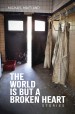
“Working-class Edmonton of the ‘80s
The memory of the 1986 Gainer’s strike was influential in the plot of a new book featuring Edmonton in the 1980s.
The World Is But a Broken Heart, by Michael Maitland, is a collection of 11 stories about the Fitzpatricks, a down-on-their-luck family trying to make it in Alberta’s capital city. The stories feature three brothers — Dale, Kenny and Patrick — and a father who works at a meatpacking plant and is numbed by the violence he sees on a daily basis.
Maitland grew up in Ontario but lived in Edmonton in the ‘80s and attended the University of Alberta. On top of being an author, Maitland is also a filmmaker.”
Read the full review at Edmonton Journal
More Reviews of this title
“A TMR Starred Review
It is a grey morning with the slightest hint of peach dancing on the edges of the passing clouds, the dry leaves of the oak tree whip in the wind. A morning for reflection. Dale, Kenny, Patrick – three names that sit with me as my heart bleeds. The unfairness of life baffles me. Success and grandeur for some, broken backs, and worn-out boots for others. How can there be such a divide? A divide that has children growing up in run-down homes with run-down parents just trying to scrape by when every day is as dull and pointless as the last while others have success handed to them. I have seen the pain life’s unjust hand can cause. What Michael Maitland has given us in his collection of short stories, The World is But a Broken Heart is real, and it is raw. It will make you think of that family you went to school with, the ones that always had trouble following them, the ones with holes in their shoes, the ones with no food to eat at lunch.
The World is But a Broken Heart follows the Fitzpatrick family as they attempt a normal family life. Henry is a loud, obnoxious man who is too rough on his wife and children especially when he drinks which is every day. Maureen is the woman of the house just trying to keep her boys fed and happy, always dreaming of giving them a better life. Dale is the oldest son who is sometimes as rough as his father and always in trouble. Kenny is the loveable, curious middle boy who dreams of working for Parks Canada. Patrick, the youngest, is more of an academic. These five people make up the Fitzpatrick household with all its dysfunction and chaos. Their lives are filled with one wrong turn after another. Tough times and tragedy follow them like a curse, but they keep going because they must because there is no one to pull them from the rut. When the unthinkable happens, the family unit starts to crumble, and their lives are forever changed. The story follows the boys into adulthood, documenting how they made it through and how strong the bonds of brotherhood can be.
The characters in these stories could have been people plucked from my past. I instantly knew the Fitzpatricks because I knew two families just like them when I was growing up. Oddly enough, they were both households full of boys, so Dale, Kenny and Patrick were all familiar people to me, and it was so very easy to feel their pain. Some of the boys I knew went to prison and had addiction problems, and some are now dead. Reading this book was like seeing everything through their eyes.
Maitland wrote these stories perfectly and was able to harness the rawness of the Fitzpatricks’ situation. Every bit of pain the characters in this story feel instantly bleeds off the page and into you. I felt so angry, sad, and frustrated as I read this book because everything that happened was so unfair and I kept asking myself why, why can’t they have a win, just one win? The ending was beautiful even though the events that led up to it were so terrible. I can’t say anything more without giving it away, but I guarantee this book will destroy you.
I have been searching for a book like this for a while now, something with weight, something that will move me to silence and reflection. The World is But a Broken Heart is beautiful but ugly and has brought back a lot of emotion that I had locked away inside me. May this book serve as a staunch reminder that there are people out there who have never had a chance at success, let it be a reminder that there are others out there in worse situations than we find ourselves in, let it encourage us to be more empathetic towards our neighbours. I hope this book settles in your heart and breaks it a little, as it did mine, so that this story, so raw and true, will not be forgotten. The World is But a Broken Heart is the best book I have read in a very long time, and I highly recommend you read it. ”
Read the full review at The Miramichi Reader.
“Heartbreak and ‘passages of such beauty’
As the title suggests, The World Is But a Broken Heart is not a cheery book. In fact, the linked stories in this debut collection reveal a family for whom just about everything that can go wrong does exactly that.
Henry works in a mind-dulling job at a slaughterhouse in Alberta. It’s a place where “Happiness had nothing to do with hope. Hope was found in a weekly lottery ticket, success an apprenticeship or a steady job in the oil patch.”
He and his wife Maureen have three sons, brothers who scrap with each other, just as their parents do: “…she listens to the familiar snapping and creaking of Henry coming down the stairs. With each step, Maureen senses the habitual acrimony they share steal down behind him. Over the years, Henry has put a fist through the drywall. He’s thrown cups and plates, cursed at her and the boys until he was blue in the face, although, lucky for him, he’s never raised a fist to her, or threatened to, even when they’ve been spitting venom at each other.”
Life isn’t easy, not even with Henry’s union job and Maureen doing cash at the local Safeway. But when Henry decides that he needs to move up the ladder, conflicts in the family only grow. Nevertheless, Henry steps away from the security of the union to become a foreman. And this is when, just as Maureen had argued they would, things start to go south for all of them.
Sure enough, it isn’t long until there’s a strike—an event that pits the father and his family even further against each other. When scab workers are brought in, along with riot-geared patrols, things get uglier:
“Men with arms as thick as logs and a thirst for beer and justice, wearing toques and Oilers caps, their bodies warm with worn winter jacket and thick flannel lumberjack shirts, their skin damp under their clothes, gather in preparation for the daily battle. Jockstraps and cups are worn over blue jeans.”
The divisions between the greedy, pig-headed owner of the plant and the poor-fuck striking workers seem impossible to bridge. Maitland describes the situation as being one “…where there are two types of men; men, and men who make their money off the backs of other men.”
And as for those strikebreakers—immigrants, desperate for work—they’re the butt of every kind of slur you can imagine. If you’re a reader who’ll be offended by racist name-calling, you’d better check your hat at the door, as Victoria-based Maitland lets his characters speak the way real people do (or did). In truth, I wouldn’t be at all surprised to know that quite a few folks still do. Such dialogue is just another aspect of the convincingly real scenes the author conjures.
Maitland’s Alberta is not only believable, but can be downright grim. I was sometimes taken aback by a device that Maitland uses—an odd kind of a technique I can only call ‘dark foreshadowing.’ Every once in a while he slips in a quick mention of a huge plot point (one that’s negative, and in a big way) that hasn’t yet occurred. This usually appears in the midst of simple exposition. And then sure enough, some while later, said horrible event that was alluded to occurs.
In a hideous kind of life-imitating-art scenario, recent news included a story that one of the book’s major tragedies seems to echo. And now this morning, yet another freakish incident has occurred. Coincidence? I suppose, though I’m not sure I want Maitland fashioning any new work around details from my life. Something about such realistically harsh events give me pause; they scare me as a little bit eerie in what looks like prescience.
On the other hand, despite freakish tragedies, there are passages of such beauty, you want to take a freeze-frame, as in this scene from a silent car ride, father and son:
“The urban sprawl had long surrendered to farmland with its rolling hills and ravines lined with copses of lodgepole and jack pine, poplar and willow trees, flat farmers’ fields brimful of spring wheat, barley, and alfalfa. Abandoned sheds, their wood exteriors grey with age, stood canted from the wind. A fox sat still on a rise and sniffed the air. Black and white magpies and other scavenger birds ragged across the clear blue sky or sat patiently on fence posts along the side of the road…”
Although there are few continuity glitches that left me turning back pages to look for what I must have missed, the writing is solid; I feel that I know these people, and that they are more than mere fictions—they’re real. That’s probably why their heartbreaks are ones I experienced so deeply.
As the mother of sons, I can vouch for the book’s perceptive descriptions of the often up-and-down relationship between brothers—along with the depth of caring that underlies those squabbles even when they can occasionally seem cruel. And as a reader who perhaps becomes too involved with what’s on the page, I can only caution you about this powerful book: it’s going to stay with you, perhaps longer than you’d like. But then, as one of the characters says, in what feels like a moment of wisdom, “What’s the world without a broken heart, eh?””
Read the full review at The British Columbia Review.
“Book review: Victoria author deftly captures lost souls in unforgiving family terrain
A debut collection of linked stories — which centres on the tragically unhappy Fitzgerald family — depicts how love, ambition, hope and comfort fade or sour.
Hardship is embedded in the bones of The World is But a Broken Heart.
In Victoria author Michael Maitland’s debut collection of linked stories — which centre on the tragically unhappy Fitzgerald family of Alberta — love, ambition, hope and comfort fade or sour. Words are used to denigrate, lament or accuse. Home, a series of ugly rentals with punched-hole walls on the wrong side of the tracks, is a site for arguments, threats, outbursts and tears.
Escape — from lottery ticket purchases, beer by the barrel, and TV sports to one of the grimmest extramarital affairs ever committed to print — is a lost cause.
And, year after year, anger, resentment, sadness, rage, and bitterness are bumper crops. Further, death — by drowning, by cancer, by Alzheimer’s, by projectile — further darken a portrait in which Henry, the furious head of the family, is known to possess a talent for killing because, for a time, he wielded a stun gun during his shifts at the meat-packing plant.
In this dire, impoverished locale, success is “measured by a clean criminal record and a steady job,” the narrator of “New Year’s Eve” remarks. While Henry and Maureen match that criteria, by most other metrics of measurement, they’re profound failures. “It doesn’t get any easier,” a “Safeway lifer” tells Maureen. That outlook pervades Maitland’s collection.
Neither entertaining nor heartwarming — and mildly hopeful in exactly one story of 11 — Maitland’s stories are nonetheless arresting. He’s a maestro with bleakness; and his precision with the nuances of awful family dynamics is discomfiting in the extreme.
Capturing the Fitzgeralds in the late ’80 and early ‘90s as the three sons grow up and as Henry switches from the factory floor to management, the stories’ arc offers a sombre equation about how X (Henry and Maureen’s own histories, misery-soaked marriage, and helplessness to change themselves) + Y (circumstances) = woe visited on the next generation.
With the exception “Apart Together,” which is set years after the rest, the stories offer moments that convey a progression from bad to worse. “Disneyland” relates the futility of Maureen’s dream of a family vacation and “Room 302 of the Blue Buffalo Motel,” with its love tokens in the form of vegetables “with small deformities,” is too sad for words. The trio of “The Strike,” “Mourning,” and “In Death There is Life (Insurance)” are all the more vivid for capturing how a house of men copes with loss.
Successes aside, Maitland could sketch with a lighter hand. For example, in depicting Maureen’s overweight middle-aged body and the pure hideousness of the Fitzgerald rental, the narration is emphatic about telling readers exactly what to see and how to see it. Or, on one page alone, Maitland describes Maureen and Henry’s “habitual acrimony,” their “spitting venom” at one another, and “They sit across from one another, dull knives scraping at concrete”: capable as writing, the repetition doesn’t help develop our understanding of the ill-starred marriage.
Both propulsive and gripping, the stories in The World is But a Broken Heart capture lost souls in unforgiving terrain. Though the unremitting forlornness won’t have universal appeal, there’s no denying Maitland’s command of it.”
Read the full review at Vancouver Sun.




 Back to top