

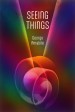
About the book
About the author

Richard Sommer taught myth and poetry at Montreal's Concordia University for many years, served three decades as a volunteer game warden in the Eastern Townships of Quebec, and led a citizens' environmental group in a seven-year battle, ultimately successful, to save the Townships' Pinnacle Mountain from developers. Sommer's previous books include Homage to Mr. Macmullin, Blue Sky Notebook, left hand mind, Milarepa, The Other Side of Games, Selected and New Poems, Fawn Bones, and The Shadow Sonnets. In 2004, Sommer was diagnosed with prostate cancer, and the verse journal, Cancer Songs, has been an important part of his response to this challenge. He lives on a dirt road outside Frelighsburg with his wife of more than forty years, dance improvisationalist, teacher and artist Victoria Tansey. They have three grown children, three grandchildren, and currently three cats.
Excerpt
Writing to find the sonnet's real way
before she ups & leaves me flat, flies home.
(That first line was for tomorrow's poem,
but now I'm in the tomorrow of yesterday.)
Would she leave me so? You bet she would.
Yet where is home for sonnets, in these days?
The sonnet which is more than private maze
or verbal seduction or pedestal of wood
painted to look like marble which in turn
was carved to look like what the past seemed then.
Tradition: patriarchs pat bums again,
stuff ashes of flashy passion into an urn.
The sonnet's more, or less, than such lost
lace. The man's poem. His pretensions, his grace.
Reviews
“Richard Sommer is the latest in a long line of poets, mostly men, who have been seduced by the sonnet form, that wonderful controlled burning that embraces whimsy, reflection, nostalgia, work-play, and a host of other discrete connections with daily…” >>
“How pleasing strange to come across a book of sonnets in the late 20th century. In a time when the form is generally derided as at best nostalgic or at worst politically reactionary, I was anxious to explore this unusual…” >>
“These poems have a contemporary feel: the reader often forgets the constraints under which Sommer is working because he stretches the medium, bending the rules of metre and rhyme.” >>
“These sonnets are 'smoky songs' of love and sex and politics, felt acutely, oh like the ache of the jazz horn in the 'sinuosities of Mingus.' Hurt, memory, and cigarette smoulder in Sommer's music. In his muted stanzas you will…” >>
PURCHASE FORMAT
PAPERBACK
$14.95
112 pages
ISBN ISBN: 0-921833-17-2
ISBN 13: 978-0921833-17-8
Order directly from Signature Editions or from these retailers:





 Back to top