
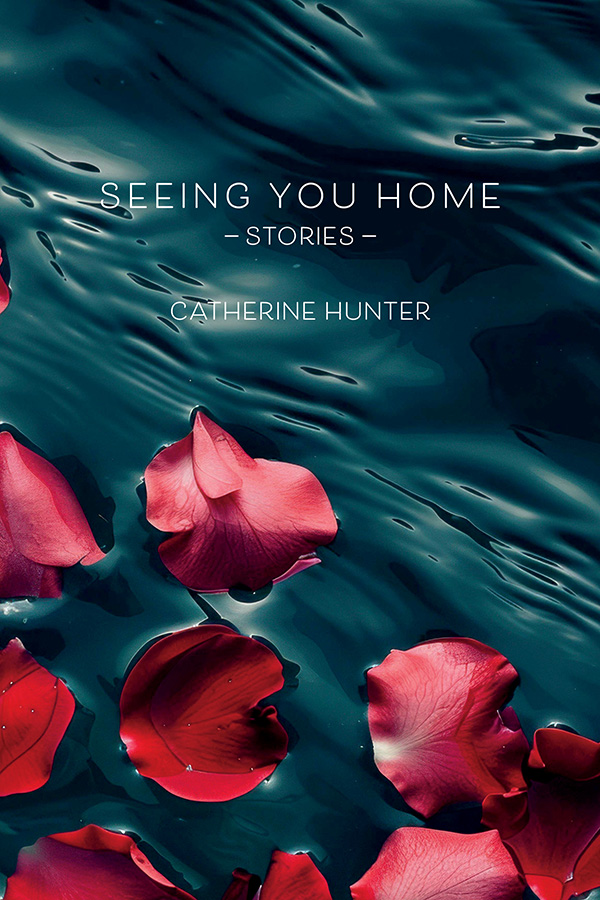
About the book
- Danuta Gleed Literary Award, Finalist
About the author

Catherine Hunter's most recent publication is the poetry collection St. Boniface Elegies, which won Manitoba's Lansdowne Prize and was shortlisted for the Governor General's Award for Poetry. Her other works include three previous books of poems, including Latent Heat, which won the McNally Robinson Manitoba Book of the Year Award; the novel After Light, which was a finalist for the Margaret Laurence Award for Fiction, the Carol Shields Winnipeg Book Award, the McNally Robinson Book of the Year Award, the Mary Scorer Award for Best Book by a Manitoba Publisher, and the High Plains Book Award for Best Woman Writer; and the novella In the First Early Days of My Death , which was shortlisted for the Margaret Laurence Award for Fiction and the McNally Robinson Book of the Year Award. In addition to these titles published with Signature Editions, she has also published several mysteries with Ravenstone/Turnstone, and recorded a spoken word CD (Rush Hour, from Cyclops Press, with a bonus track by The Weakerthans). Her writing has appeared in the literary journals The Malahat Review, Prism International, Essays on Canadian Writing, Matrix, West Coast Line, Prairie Fire, CV2, and Grain, and the anthologies The Echoing Years: Contemporary Poetry from Canada and Ireland; Post Prairie: An Anthology of New Poetry; Best Canadian Poems 2013; Best Canadian Poems 2015; and (forthcoming) Best Canadian Poems 2019. She edited Exposed, an anthology of five new women poets, and Before the First Word: The Poetry of Lorna Crozier, and for ten years she was the editor of The Muses' Company poetry press. Catherine recently retired from thirty years of teaching English and Creative Writing at the University of Winnipeg.
Excerpt
from Veil Nebula Supernova Remnant
Once, I think it was the first morning of a new year, early in our marriage, Rich tried to explain invisible light to me. We were lying in bed, naked, looking at the prism paperweight he'd given me for Christmas, watching the pale winter sunshine splinter like stained glass into beams of colour.
It seemed an impossible paradox. Invisible light? How can we call it light if we can't see it? I listened to his explanation the way I listened to poems in a foreign language, enjoying the rhythms and sounds of the strange words. I loved to hear Rich talk. Before he fell ill, he had a powerful voice, deep and mellow. I lay with my ear to his chest, feeling the vibrations travel through my body, though on the topic of invisible light, I understood nothing.
Twenty years after that conversation, x-rays detected a mass in Rich's left lung and tests confirmed it was cancer. Within days, we learned that the cancer had spread to his spine and to his brain. It was a lot of news in a very short time.
His doctors prescribed an emergency course of radiation to keep him alive. That's when I remembered the phrase "invisible light," because that's what radiation is. We can't see it, but it sees us. It penetrates the darkness of our bodies to look deep inside, seeking out irregularities. It was invisible light that found the metastatic cancer cells, and it was invisible light that could destroy them.
Nothing to be afraid of, the oncologist said. Radiation is natural. It's all around us every day, in different forms: sunshine, television, cosmic rays. With an ordinary Sharpie, technicians marked an x above each cancerous spot on his vertebrae. They crafted a mask of his face that they'd bolt to the table to keep his head still while they fired photon beams into his brain.
The treatments took ten days. The side effects came later and lasted longer, draining his energy. For weeks he lay on the couch, listening to music or watching baseball. He lost his appetite, eating less and less until finally the mere sight of food demoralized him. I stopped serving meals and learned to offer small items, one at a time--a cheese stick, a cracker, a plum. Sweet things worked best. Our neighbour Babs helped out by baking trays of bite-sized butter tarts and tiny lemon squares.
During all of this, I was weirdly jealous of the invisible light. It could get inside of Rich, where I could never go, see parts of him I could not see. I was also afraid of it. I didn't trust the doctors' reassurances. Radiation was not only powerful, I thought, it was alien. Then I remembered that all light is alien. Visible or invisible, it comes to us from outer space.
"You think too much," Babs often told me.
But I wanted to understand. I thought that would help.
Reviews
“Hunter’s poignant, linked stories mull love, loss and meaning
Winnipeg poet and novelist Catherine Hunter’s new collection of 10 linked stories, Seeing You Home, is about longtime married couple Clare and Richard as it weaves through their time…” >>
“This collection of short stories, a finalist for the Danuta Gleed award, is a meditation on grief, loss and memory. Though every story features the bereaved, Clare, and the deceased, her husband Rich, I won’t call it a “collection of…” >>
Audio
Wednesday, December 2
Winnipeg
CKUW
Catherine Hunter is interviewed by CKUW's Ron Robinson about her new novel, After Light.
(MP3 file, 8:52)
Audio
Sunday, October 13
Winnipeg
CBC
Poet and English professor Catherine Hunter has been named a finalist for the prestigious award. Her collection of poetry, "St Boniface Elegies", deals with many themes, particularly the recent death of her husband Ron, making the recognition bittersweet.
Listen to the full interview here:
https://www.cbc.ca/listen/live-radio/1-367-the-weekend-morning-show-manitoba/clip/15741076-winnipeg-poet-named-as-finalist-for-the-governor-general-literary-awards
(7:50)
PURCHASE FORMAT
PAPERBACK
$22.95
188 pages
ISBN 9781773241593
Order directly from Signature Editions or from these retailers:


EBOOK
$9.99
188 pages
Epub ISBN: 9781773241609
eBOUND Digital Certified Accessible Ebook


 Back to top