
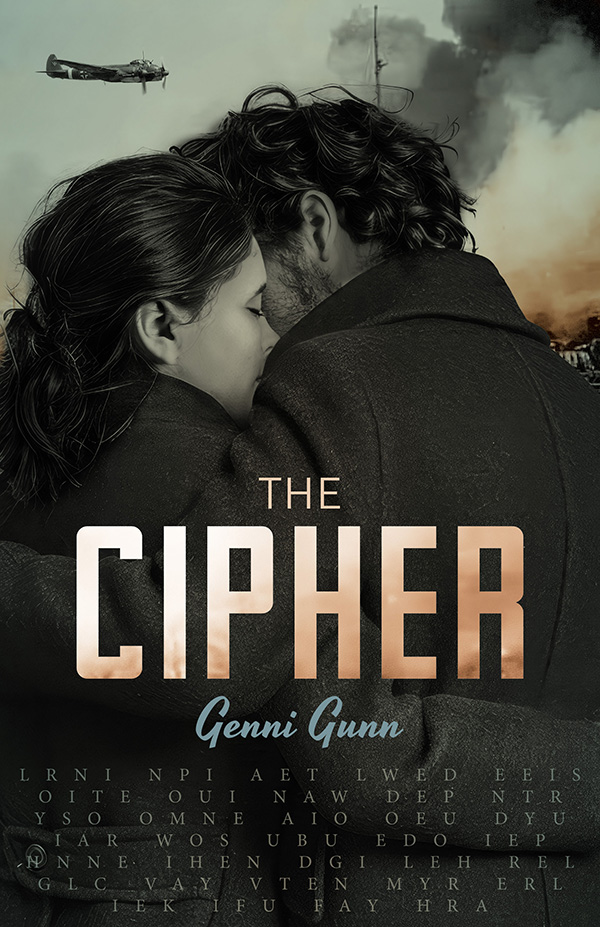
About the book
- SCWES Book Award for Fiction, Winner
About the author

Genni Gunn is an author, musician and translator. Born in Trieste, she came to Canada as a child. She has published twelve books: three novels -- Solitaria (longlisted for the Giller Prize 2011), Tracing Iris (made into a film, The Riverbank), and Thrice Upon a Time (finalist for the Commonwealth Writers' Prize); three short story collections -- Permanent Tourists, Hungers and On the Road; three poetry collections -- Faceless, Mating in Captivity (finalist for the Gerald Lampert Award), and Accidents; and a collection of personal essays, TRACKS: Journeys in Time and Place. As well, she has translated from Italian three collections of poems by two renowned Italian authors: Devour Me Too (finalist for the John Glassco Translation Prize) and Traveling in the Gait of a Fox (finalist for the Premio Internazionale Diego Valeri for Literary Translation) by Dacia Maraini, and Text Me by Corrado Calabrò. Two of Gunn’s books have been translated into Italian and Dutch.
As well as books, she has written an opera libretto, Alternate Visions, produced by Chants Libres in 2007 (music by John Oliver), and projected in a simulcast at The Western Front in Vancouver; her poem, "Hot Summer Nights" has been turned into classical vocal music by John Oliver, and performed internationally. Before she turned to writing full-time, Gunn toured Canada extensively with a variety of bands (bass guitar, piano and vocals). Since then, she has performed at hundreds of readings and writers’ festivals. Gunn has a B.F.A. and an M.F.A. from the University of British Columbia. She lives in Vancouver.
Excerpt
A few weeks after Mick’s departure, on June 10, 1940, Italy entered the war and invaded southern France.
That night, a fierce knocking at the door of the house awakened Olivia. Her bedside clock read a quarter to three a.m. She scrambled up, wrapped a dressing gown over her pajamas, and followed her father and mother down the stairs.
“Open up!” the voices shouted.
Papa unlocked the door. Two officers stood on the sill. “Carlo Baldini?” one said, flashing his Special Branch identification.
“What’s wrong?” Papa said, alarmed. “What’s happened? Is it my son?”
The officer shook his head impatiently. “You’re under arrest,” he said. “Get dressed quickly and pack one bag.”
Olivia’s mother put her arm around Olivia’s waist and pulled her close.
Papa frowned, bewildered. “But on what charge?” he said.
“Orders. We’re rounding up all Italian-born citizens,” the officer said, looking past Papa. “Where are your sons?” He strode across the room and yanked two photographs in their frames from the wall: one of Vittorio Emmanuele III, the King of Italy, and the other of Il Duce, Benito Mussolini. “Fascists!” he hissed. One of the frames slipped from his hand, and glass shattered across the floor.
“But we are British citizens,” Papa said. Olivia and her mother now stood behind him, holding their dressing gowns tight across their bodies. “I’ve been here more than twenty years.” He ran a hand through his hair. “My family,” and here he waved his arm to include the two women, “are all British born. We are not fascists. I am a simple café owner.”
The officer consulted his notebook. “Where are your sons?” he asked again, shifting from foot to foot.
Papa shook his head. “One is in the British Navy and the other is in Italy visiting his grandparents.”
The officer sneered at the word “Italy” as if the word substantiated Papa’s arrest. He scribbled something in the notebook, then waved his hand in front of Papa’s face. “Hurry now. Get dressed and pack a few things. We have no time to lose.”
“Where are you taking my husband? What has he done?” Mamma asked, stepping forward.
The two officers ignored her.
“But when is Papa coming back?” Olivia said, her voice tremulous.
The officers stared her up and down, shook their heads, but said nothing. While Papa and Mamma went upstairs to do the men’s bidding, Olivia cowered by the stairs, wondering why they were detaining her father, who was the gentlest of men. Coming back, coming back. The words began repeating in her head, a mantra, a premonition.
The whole exchange lasted less than twenty minutes. Mamma packed toiletries, a change of clothes and underwear. Papa dressed, and then gathered his heavy winter coat and folded it over his arm. Olivia’s arms encircled his neck, unwilling to let go. He kissed her, then embraced Mamma. “Can you tell me where I’m going?” he said, but the two officers ushered him out without another word.
When the door clicked shut, Mamma collapsed in a kitchen chair, sobbing, while Olivia rubbed her shoulder. “It’s those fascists!” Mamma said. “Their arms can reach even here!” She wiped her tears angrily, got up, and retrieved the Mussolini photograph. She spit on it, before ripping it to shreds. She had never wanted it on the wall, but Papa had insisted they keep it there, lest someone betray their anti-fascist sentiments to the Italian Consulate. He feared Aldo’s fate back in Italy. Mamma switched on the radio and turned the dial, trying in vain to find some explanation. “Clean up that shattered glass,” she said.
Olivia got out the broom and dustpan. She began with the largest shards and made piles of glass according to size. Shattered, she thought, hearing the word rebound in her head. Her own tears began, though she’d been trying to hold them back. “What are we to do now?”
Mamma stopped twisting the radio dials and drew herself up. She took the broom out of Olivia’s hand and swept all the glass into one large pile, which she pushed into the dustpan. “We will open the café as usual,” she said. “We will hold our heads high.” She pulled Olivia into an embrace, patting her back.
“Let’s get some rest now,” she said, and the two of them went upstairs.
At the door of her bedroom, Mamma turned and kissed Olivia, murmuring, “Tomorrow, I’ll make inquiries. This is all a mistake. It’ll be all right, you’ll see.”
From Genni Gunn
Reviews
““Ah, love, let us be true to one another,“ writes Matthew Arnold in his haunting poem, “Dover Beach.” His plea is urgent because the entire world, he grieves, is but “a darkling plain / Swept with confused alarms of struggle…” >>
“With The Cipher (Signature Editions 2024, 239 p.), Genni Gunn has written a masterful work that captures the sacrifices of people during war time. It is also a powerful love story set during World War II. The main characters, Olivia and Nino,…” >>
Video
The Cipher and When We Were Ashes Virtual Launch
Join Genni Gunn and Andrew Boden, with host Claudia Casper, for the virtual launch of The Cipher and When We Were Ashes.
PURCHASE FORMAT
PAPERBACK
$22.95
242 pages
ISBN 9781773241425
Order directly from Signature Editions or from these retailers:


EBOOK
$9.99
242 pages
Epub ISBN: 9781773241432
Benetech Global Certified Accessible Ebook
Download from Signature Editions and add to your eReading device or buy from these retailers:





 Back to top